Mutagenic Agents Quiz – Verify Your Knowledge Now
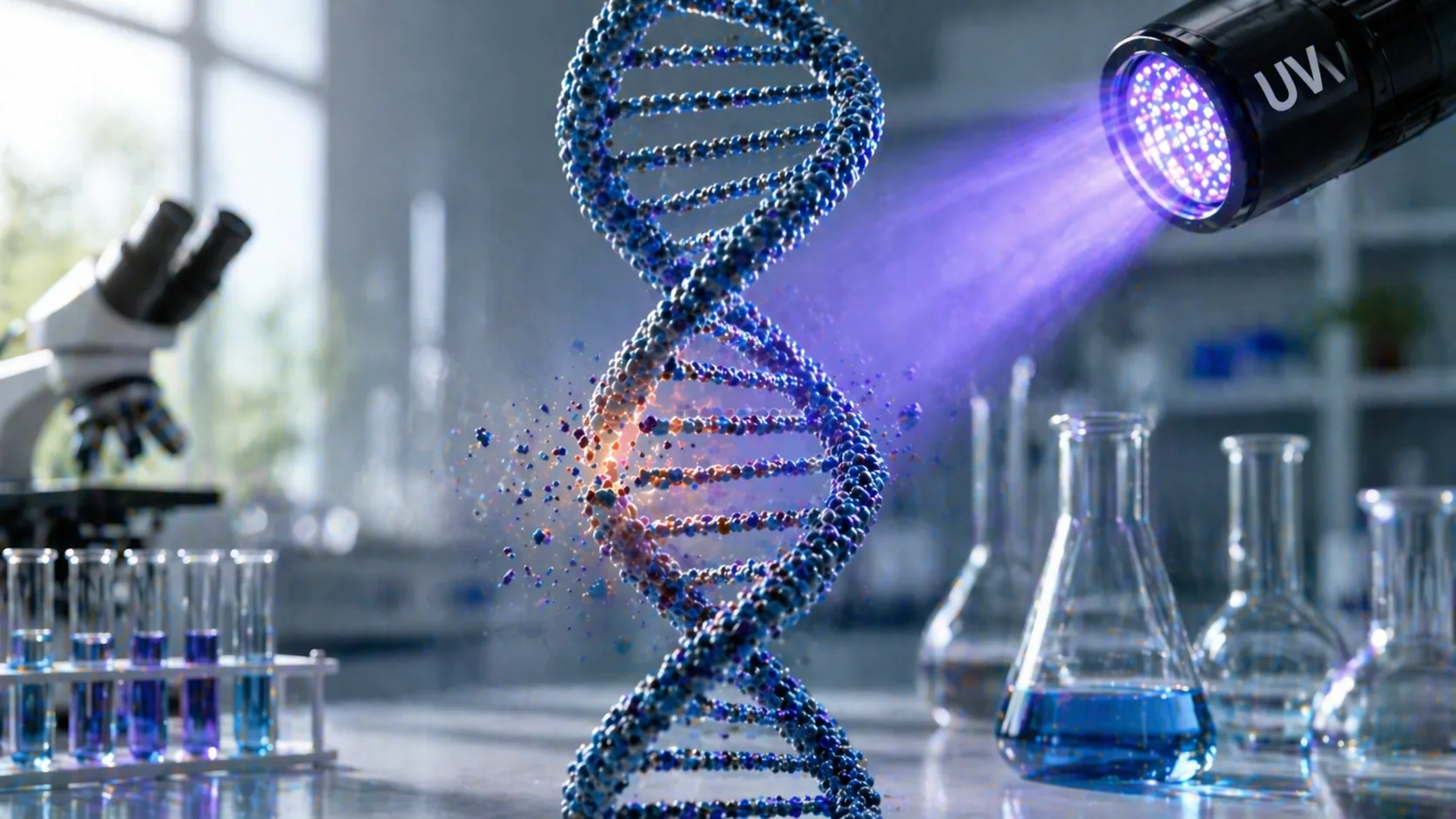
First of all, mutagens are substances that damage DNA. Moreover, DNA damage primarily happens during the replication and repair processes. In addition, these mutagens can be classified structurally into three categories: chemical, physical, and biological. Furthermore, biological mutagenic agents include several species of bacteria, viruses, and transposons, etc. On the other hand, X-rays, alpha particles, and gamma rays are few examples of physical mutagenic agents. However, a number of chemical agents such as mustard gas, acridines, nitrous acid, and alkylating agents induce different types of DNA damages. In conclusion, the purpose of the mutagenic agents quiz is to assess and evaluate your prior knowledge about mutagenic agents. Finally, we (TSP) hope our audience will enjoy “Mutagenic Agents Quiz” like our other quizzes.
Attempt Mutagenic Agent Quiz
Watch Mutagenic Agents Quiz
Click here to watch Mutagenic agents quiz
Attempt Other TSP Quizzes
Click here to take more TSP quizzes.
Watch TSP Quizzes
In addition, The Scholar Post facilitate our audience to watch our quizzes instead of attempting.
References
For detail information of the given questions consult these references work.
Q1
- Durland, J and Ahmadian-Moghadam, H 2022 Genetics, Mutagenesis. NCBI Bookshelf. Available at https://www.ncbi.nlm.nih.gov/books/NBK560519/ [Last accessed 12 February 2024].
Q2
- Chatterjee N, Walker GC. Mechanisms of DNA damage, repair, and mutagenesis. Environ Mol Mutagen. 2017 Jun;58(5):235-263. doi: 10.1002/em.22087. Epub 2017 May 9. PMID: 28485537; PMCID: PMC5474181.
Q3
- Durland, J and Ahmadian-Moghadam, H 2022 Genetics, Mutagenesis. NCBI Bookshelf. Available at https://www.ncbi.nlm.nih.gov/books/NBK560519/ [Last accessed 12 February 2024].
Q4
- Naik RP, Haywood C Jr. Sickle cell trait diagnosis: clinical and social implications. Hematology Am Soc Hematol Educ Program. 2015;2015(1):160-7. doi: 10.1182/asheducation-2015.1.160. PMID: 26637716; PMCID: PMC4697437.
Q5
- Kew M. C. (2013). Aflatoxins as a cause of hepatocellular carcinoma. Journal of gastrointestinal and liver diseases : JGLD, 22(3), 305–310.
Q6,7, 8, 10
- Rahmani, S., Abdollahi, M. Novel treatment opportunities for sulfur mustard-related cancers: genetic and epigenetic perspectives. Arch Toxicol 91, 3717–3735 (2017). https://doi.org/10.1007/s00204-017-2086-7
Q9
- Choi, J. R., Koh, S. B., Kim, H. R., Lee, H., & Kang, D. R. (2018). Radon Exposure-induced Genetic Variations in Lung Cancers among Never Smokers. Journal of Korean medical science, 33(29), e207. https://doi.org/10.3346/jkms.2018.33.e207