Selective Breeding vs Genetic Engineering
How Is Genetic Engineering Different from Selective Breeding?
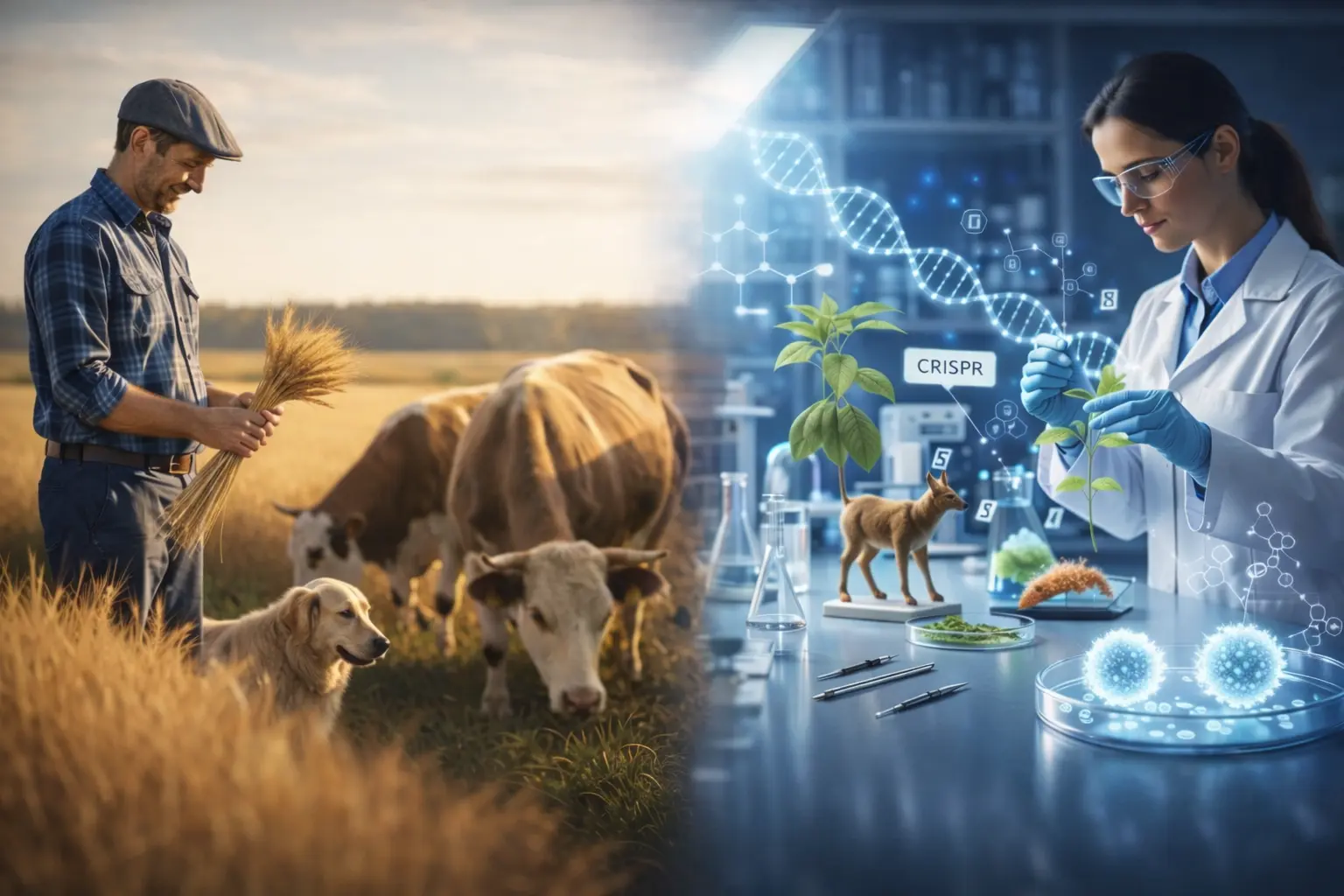
Selective Breeding Vs Genetic Engineering are two methods used to modify the traits of plants and animals, each with its own approach and impact. For thousands of years, from the first farmers saving seeds from their best plants to modern laboratories where DNA is edited directly, humanity has consistently sought to shape the living world to meet its needs. Over time, this journey has unfolded through two fundamental methods: namely, selective breeding versus genetic engineering.
These approaches are often mentioned together; however, they operate on different planes of time, precision, and biological possibility. Understanding their distinct mechanisms, scopes, and implications is crucial for navigating the modern debates surrounding our food, medicine, and environment.
Selective breeding works by harnessing nature’s existing variation, while genetic engineering rewrites the source code of life itself.
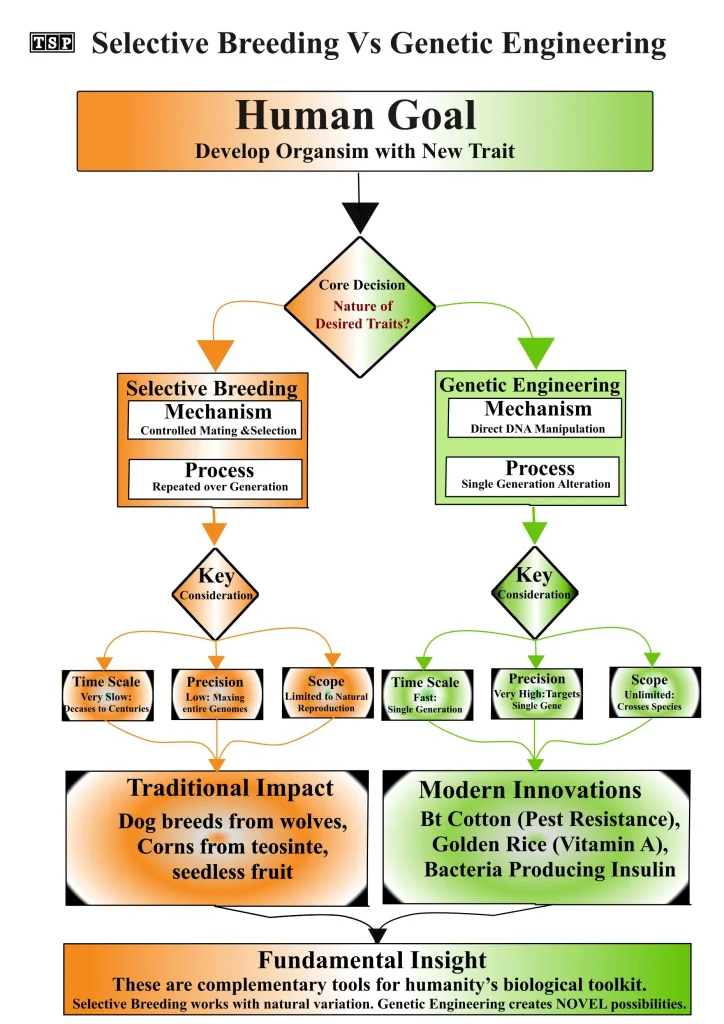
This distinction is more than academic; it frames critical discussions on sustainability, ethics, and the future of biotechnology. This article explores the key differences between these two powerful tools for shaping heredity (See infographic image).
Key Takeaways: Selective Breeding vs Genetic Engineering
- Core Mechanism: Selective breeding relies on controlled mating over generations; genetic engineering uses direct laboratory manipulation of DNA.
- Precision and Control: Selective breeding mixes thousands of unknown genes; genetic engineering can target a single, specific gene.
- Speed and Scope: Changes via selective breeding are slow, bound by natural reproduction; genetic engineering is rapid and can transfer traits across any species barrier.
- Outcome Predictability: Outcomes from selective breeding are often unpredictable and come with unintended traits; genetic engineering aims for highly specific and controlled results.
A Head-to-Head Comparison: Two Tools for Shaping Life
| Table 1: Selective Breeding vs Genetic Engineering | ||
| Feature | Selective Breeding (Artificial Selection) | Genetic Engineering (Genetic Modification) |
| Fundamental Process | Selecting organisms with desired traits and breeding them over multiple generations. | Directly isolating, modifying, or inserting specific genes into an organism’s genome in a lab. |
| Timescale | Slow (requires many life cycles, often decades or centuries for significant change). | Fast (genetic change is achieved in a single generation). |
| Genetic Precision | Low. Entire genomes are combined, transferring many unknown genes alongside the desired ones. | Very High. Allows for the editing or insertion of a single, well-characterized gene. |
| Source of New Traits | Limited to traits that already exist within the species’ natural gene pool or that of very close relatives that can interbreed. | Potentially unlimited. Genes can be taken from any other organism (plant, animal, bacterium, virus) or synthesized. |
| Historical & Modern Examples | All modern dog breeds from wolves, corn from teosinte, Brahman cattle, seedless watermelons. | Bt corn (pest-resistant), Golden Rice (Vitamin-A enriched), bacteria engineered to produce human insulin, AquAdvantage salmon. |
Selective Breeding: The Ancient Art of Patience
Selective breeding, also known as artificial selection, is the cornerstone of agriculture and domestication. Essentially, it works on the principle of heritability: by selecting parent organisms that exhibit a desired trait—such as larger grain size, higher milk yield, or a particular flower color—and subsequently mating them, breeders can encourage that trait in their offspring.
How It Works: By consistently choosing the “best” individuals to reproduce over many generations, humans gradually shift the genetic makeup of a population. This process mimics natural selection but with a human-directed goal.
Limitations and Trade-offs: The primary limitation is a lack of precision. When two organisms mate, they mix their entire genomes. This means that while a desired gene is passed on, so are thousands of others, some of which may carry undesirable traits (e.g., breeding for a certain dog body shape that inadvertently causes hip problems). It is also a slow process bound by an organism’s natural reproductive cycle and is restricted to genes already present in the breeding population.
Genetic Engineering: The Modern Science of Precision
Genetic engineering represents a paradigm shift. Instead of relying on chance combinations during reproduction, scientists can directly access and modify an organism’s genetic blueprint—its DNA.
How It Works: Using tools like restriction enzymes, gene guns, or the revolutionary CRISPR-Cas9 system, geneticists can identify a specific gene responsible for a trait, cut it out, and insert it into the DNA of another organism. This allows for the creation of Genetically Modified Organisms (GMOs).
Capabilities and Scope: This method offers surgical precision and dramatically expands what is possible. Traits can be introduced from entirely unrelated species (e.g., a bacterial gene for pest resistance inserted into a plant), or problematic genes within an organism can be “silenced” or corrected. This enables solutions that are impossible through selective breeding alone, such as creating crops that withstand harsh climates or developing new medical therapies.
Why the Distinction Matters: Implications and Controversies
The differences between selective breeding vs genetic engineering have profound real-world consequences:
- Speed of Innovation: Genetic engineering can address urgent challenges—like developing blight-resistant crops or pandemic vaccines—at a pace that selective breeding cannot match.
- Safety and Regulation: Due to its precision, genetic engineering is often more heavily regulated. Each new GMO is subject to intense scrutiny for potential environmental and health impacts, whereas the products of centuries of selective breeding are generally accepted as “natural.”
- Ethical and Ecological Debates: The ability to move genes across species boundaries raises ethical questions about “playing God” and ecological concerns about the unintended consequences of releasing GMOs into the environment, such as impacts on biodiversity or gene flow to wild relatives.
Conclusion: Complementary Tools for a Complex Future
Selective breeding and genetic engineering are not simply old versus new; they are complementary tools in humanity’s toolkit for managing the living world. Selective breeding harnesses the power of evolution through patient, generational-scale selection. Genetic engineering provides a precise and powerful scalpel to edit life’s code directly.
The choice between them is not about which is inherently better, but about which is the most appropriate tool for a given goal, considering the time available, the precision required, and the broader ethical and ecological context. As we face global challenges from food security to climate change, a nuanced understanding of both methods will be essential for making informed and responsible decisions about our biological future.
Note: we highly recommend checking out these insightful articles on biotechnology and genetic engineering—they really help you understand how humans are shaping living organisms today!
FAQs: Selective Breeding vs Genetic Engineering
What is the difference between selective breeding and genetic engineering?
Selective breeding, consequently, improves organisms by choosing parents with desired traits over many generations. Moreover, it depends on natural reproduction and mixes entire genomes. In contrast, genetic engineering directly alters DNA in a laboratory setting. Specifically, scientists target specific genes with precision. As a result, genetic engineering works faster and produces more predictable outcomes than selective breeding.
How does genetic engineering work compared to selective breeding?
Selective breeding relies on inheritance and chance gene combinations. Consequently, it gradually shifts traits through repeated mating. In contrast, genetic engineering, on the other hand, isolates, edits, or inserts defined genes using molecular tools. For example, techniques like CRISPR allow direct genome modification. Therefore, genetic engineering bypasses generational limits and species barriers.
Is selective breeding considered genetic modification?
Selective breeding does modify genetics indirectly through inheritance. However, it does not alter DNA at the molecular level. Genetic engineering changes DNA sequences directly. Because of this distinction, regulatory agencies treat them differently. Thus, selective breeding is traditional, while genetic engineering is molecular and targeted.
Are genetically engineered foods safe to eat?
Genetically engineered foods, therefore, undergo extensive safety testing before approval. In addition, scientists evaluate toxicity, allergenicity, and environmental impact. Furthermore, regulatory bodies review each product individually. Consequently, evidence shows approved GM foods are as safe as conventionally bred foods. Thus, safety depends on regulation and scientific assessment.
Why is genetic engineering important for the future?
Genetic engineering, therefore, addresses urgent global challenges efficiently. Moreover, it supports food security, medicine production, and climate resilience. In contrast, selective breeding alone cannot meet these rapid demands. However, when used responsibly, genetic engineering complements traditional methods. Consequently, both approaches together shape sustainable biotechnology.
References/Further Reading
Core Textbooks & Foundational Reviews
- Klug, W. S., Cummings, M. R., Spencer, C. A., & Palladino, M. A. (2019). Concepts of Genetics (12th ed.). Pearson.
- National Research Council (US) Committee on Identifying and Assessing Unintended Effects of Genetically Engineered Foods on Human Health. (2004). Safety of Genetically Engineered Foods: Approaches to Assessing Unintended Health Effects. National Academies Press (US). https://doi.org/10.17226/10977
Scientific Articles on Mechanisms & Comparisons
- Bawa, A.S., Anilakumar, K.R. Genetically modified foods: safety, risks and public concerns—a review. J Food Sci Technol 50, 1035–1046 (2013). https://doi.org/10.1007/s13197-012-0899-1
- Doudna, J. A., & Charpentier, E. (2014). The new frontier of genome engineering with CRISPR-Cas9. Science, 346(6213), 1258096. https://doi.org/10.1126/science.1258096
- Doebley, J. F., Gaut, B. S., & Smith, B. D. (2006). The molecular genetics of crop domestication. Cell, 127(7), 1309–1321. https://doi.org/10.1016/j.cell.2006.12.006
Historical Context & Ethical Discussions
- Darwin, C. (1859). On the Origin of Species by Means of Natural Selection. John Murray.
- Sandler, R. L. (2007). The ethics of genetic engineering and the intrinsic value of nature. In Environmental Ethics: Theory in Practice. Oxford University Press.
Authoritative Institutional Sources
- World Health Organization (WHO). (2014). Frequently asked questions on genetically modified foods. Retrieved January 8, 2026, from https://www.who.int/news-room/questions-and-answers/item/food-genetically-modified
- U.S. Food and Drug Administration (FDA). (2022). Science and History of GMOs and Other Food Modification Processes. Retrieved January 8, 2026, from https://www.fda.gov/food/agricultural-biotechnology/science-and-history-gmos-and-other-food-modification-processes
Disclaimer: This article is for informational purposes. It simplifies complex scientific concepts for a general audience and does not constitute professional scientific or ethical advice.