Functions of Carbohydrates Quiz: 20 MCQs for Exams & Self-Assessment
Attempt “Functions of Carbohydrates Quiz”
Test your grasp of carbohydrate roles with this ‘Functions of Carbohydrates Quiz’—a curated set of 20 MCQs spanning recall to critical thinking, designed for NEET, MCAT, and A-Level success. For more high-yield quizzes, explore our full collection here!
FAQs on “Functions of Carbohydrates”
How do carbohydrates affect brain performance?
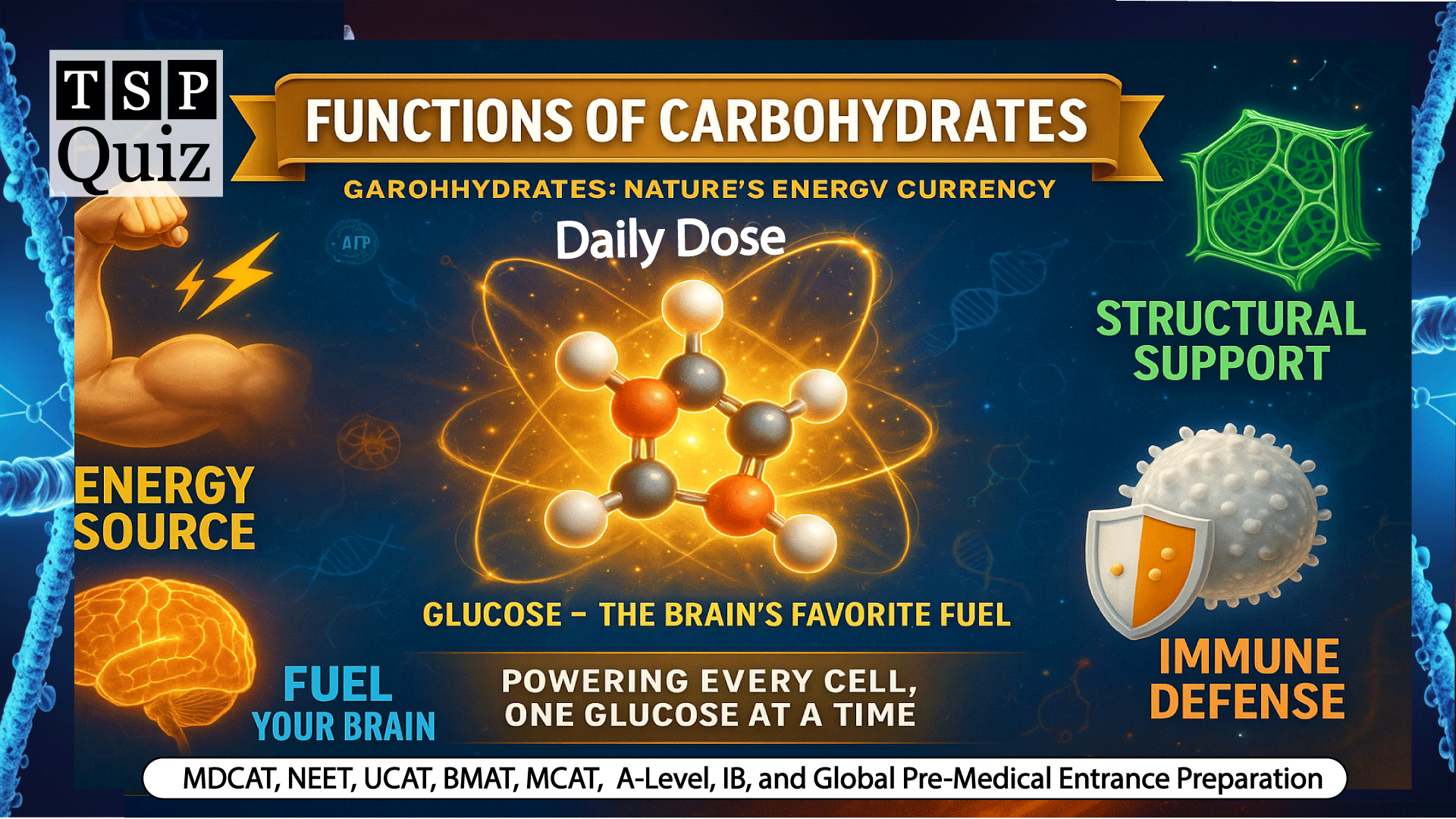
Glucose is the brain’s main fuel—accounting for over 20% of the body’s total glucose use. A steady glucose supply enhances concentration, memory, and learning. During hypoglycemia (low blood sugar), symptoms like confusion or fatigue occur. For example, students on low-carb diets often report brain fog due to reduced glucose availability.
What role do carbohydrates play in hormone function?
Carbohydrates help regulate insulin and leptin—key hormones in metabolism and appetite control. Specifically, high-glycemic carbs raise insulin levels, promoting glucose uptake. However, chronic intake of refined sugars may lead to insulin resistance. For example: In type 2 diabetes, impaired carbohydrate metabolism disrupts hormonal balance.
Do carbohydrates help in muscle recovery?
Yes. Post-workout carbohydrate intake replenishes muscle glycogen, the stored form of glucose. This restores energy and supports protein synthesis when consumed with amino acids. For example, athletes often consume a carb-protein shake (e.g., banana + whey protein) after intense training.
Can carbohydrates support immune cell activation?
Absolutely. Carbohydrate chains on glycoproteins and glycolipids help immune cells recognize pathogens. B cells, T cells, and antigens display these structures. For example, specific carbohydrate antigens on red blood cells determine ABO blood groups.
How are carbohydrates used in embryo development?
Glucose powers rapid mitosis and tissue formation in developing embryos. It’s vital for the neural tube and heart development. Example: In early pregnancy, maternal blood sugar levels directly affect fetal growth and organogenesis.
What is the role of carbohydrates in blood clotting?
Heparin, a sulfated polysaccharide, prevents abnormal clot formation by inhibiting thrombin. It’s used medically as an injectable anticoagulant. Example: Heparin is administered during surgeries to prevent clot-related complications.
Why are carbohydrates essential in wound healing?
Carbohydrates provide ATP for fibroblast activity, collagen synthesis, and angiogenesis. Glycosaminoglycans like hyaluronic acid retain moisture and support tissue regeneration. Example: Burn dressings often include carb-based gels to speed up healing.