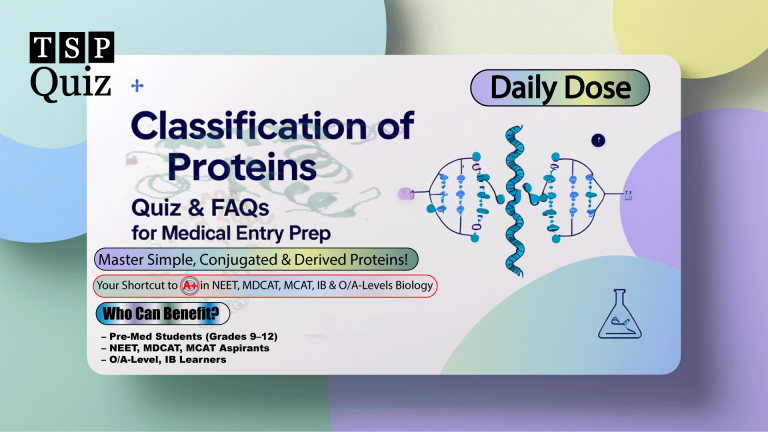
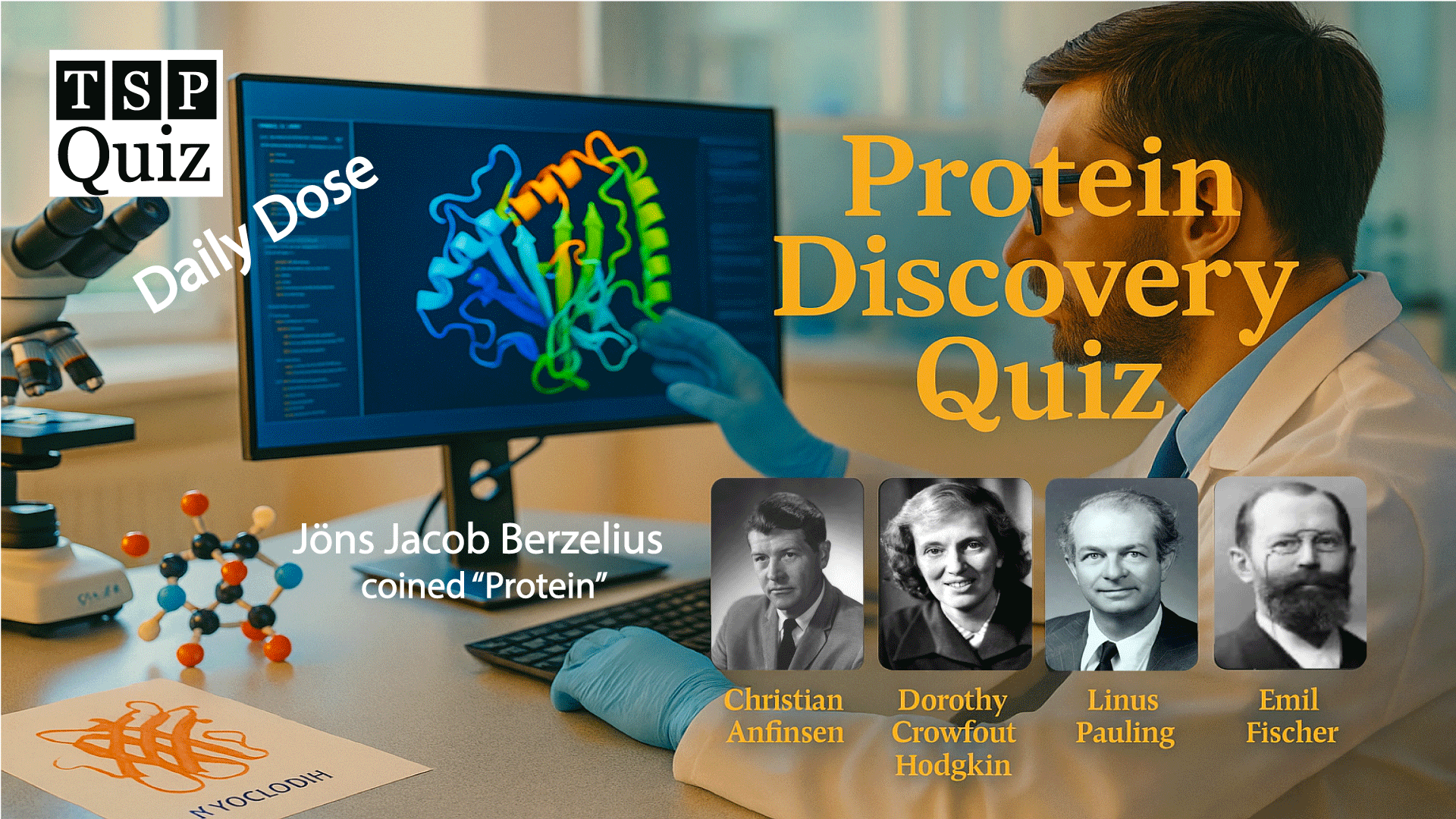
Protein Discovery Quiz– 20 MCQs for Future Scientists
Ready to challenge your protein knowledge? Click the link below to take our interactive Protein Discovery Quiz and explore more eye-opening Genetics quizzes!
Proteins Discovery: Top FAQs About Protein History, Structure & Scientific Techniques
What marked the beginning of protein discovery in science?
The journey began when Jöns Jacob Berzelius coined the term “protein” in 1838. However, James Sumner’s crystallization of urease in 1926 proved proteins could act as enzymes, transforming biochemical research.
Who discovered the first protein structure and how?
John Kendrew revealed the 3D structure of myoglobin using X-ray crystallography in the 1950s. This achievement opened new frontiers in structural biology and earned a Nobel Prize.
How was the first protein sequence determined?
Frederick Sanger sequenced insulin in 1955 using chemical degradation techniques. His work demonstrated that proteins have unique amino acid sequences and earned him a Nobel Prize.
What techniques are used today in protein discovery?
Modern methods include Cryo-EM, mass spectrometry, and X-ray crystallography. These tools help identify protein structure, function, and interactions with high precision.
Why is protein discovery important in biotechnology and medicine?
Protein discovery drives innovations in drug design, enzyme therapy, and diagnostics. For example, monoclonal antibodies target cancer cells, and recombinant insulin treats diabetes effectively.
What role did Linus Pauling play in protein discovery?
Linus Pauling discovered the alpha-helix and beta-sheet structures in proteins. He explained how hydrogen bonds stabilize secondary structures, which deepened our understanding of protein folding.
What is Cryo-Electron Microscopy (Cryo-EM)?
Cryo-EM is a powerful technique that visualizes proteins by flash-freezing them and capturing high-resolution images using electron beams. It has revolutionized structural biology.
What was the first protein used therapeutically?
Scientists used insulin as the first protein-based drug in 1922. Its discovery and later recombinant production transformed diabetes treatment and highlighted protein therapy’s potential.