
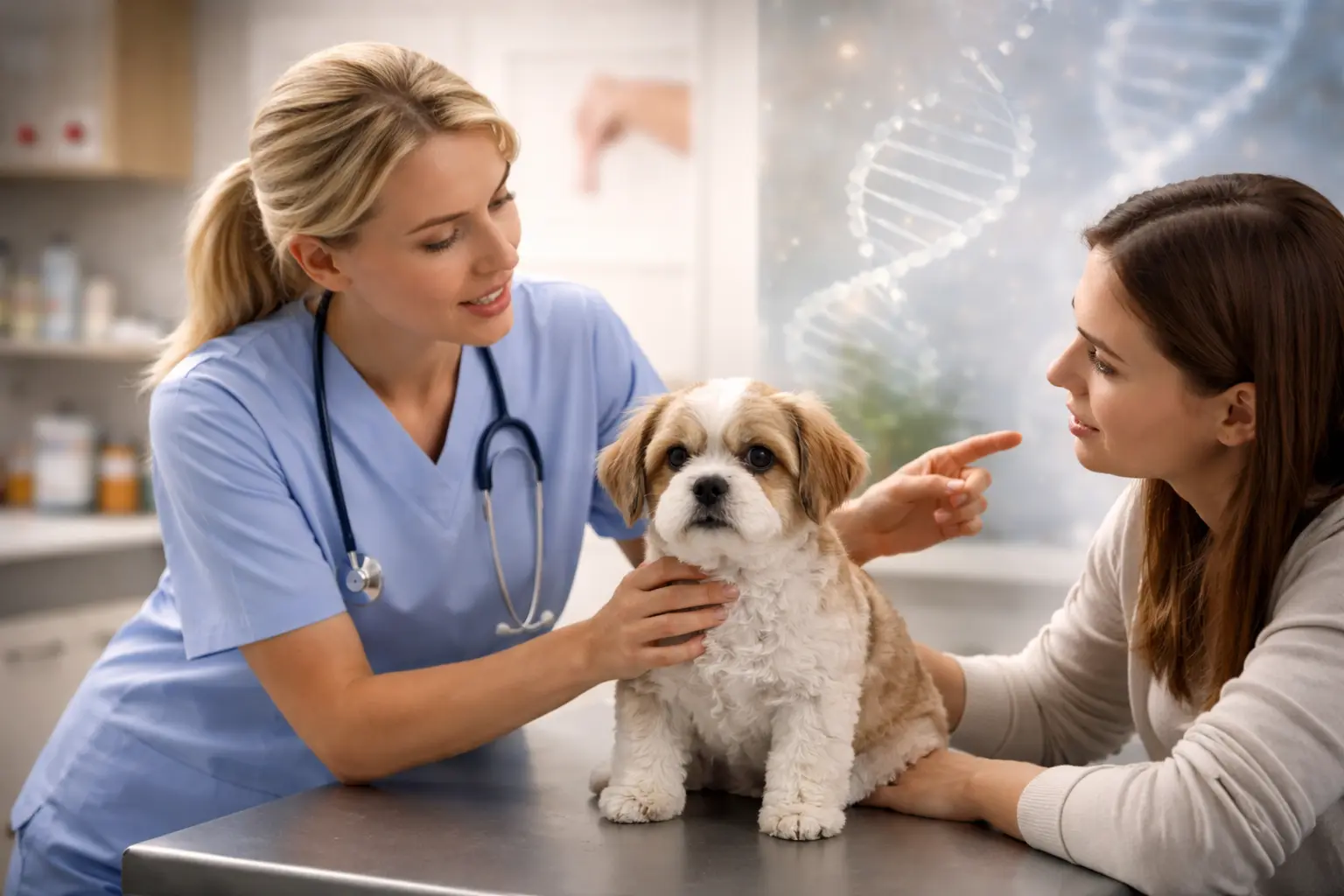
Down Syndrome in Dogs: Separating Myth from Veterinary Science
Introduction
Pet owners often notice unusual physical features or behavioral quirks in their dogs—such as wide-set eyes, short stature, or coordination problems—and wonder: Could my dog have Down syndrome? This is a very common question, especially because humans with Down syndrome share some visible traits that may appear similar.
However, the scientific truth is clear: dogs cannot have Down syndrome in the same way humans do. The genetics of dogs and humans differ significantly, and the condition known as Trisomy 21 in people is biologically impossible in canines. Still, dogs can develop other congenital or developmental conditions that look remarkably similar.
In this article, we will break down the science behind chromosomes, explain why Down syndrome is unique to humans, explore the real canine medical conditions that mimic its features, and highlight why accurate diagnosis is vital for both veterinary practice and animal welfare.
Understanding the Genetics: Why Dogs Cannot Have Down Syndrome
To understand why dogs cannot have Down syndrome, we need to look at the basics of genetics.
- Humans have 46 chromosomes arranged in 23 pairs. Down syndrome in humans arises when there is an extra copy of chromosome 21, resulting in a condition called Trisomy 21.
- Dogs, in contrast, have 78 chromosomes arranged in 39 pairs. These chromosomes carry the instructions for growth, development, and behavior. However, dogs do not possess a chromosome equivalent to human chromosome 21.
Because chromosome numbers and genetic organization are species-specific, the concept of “trisomy of chromosome 21”does not apply to dogs. Even if a dog were to inherit an extra copy of one of its chromosomes, the effects would be very different from the human condition, since the genes involved are not the same (Table 1).
In short: Down syndrome is a uniquely human condition. When owners believe their dog “has Down syndrome,” they are usually observing symptoms of other developmental disorders.
| Table 1. Chromosomal Basis: Why Dogs Cannot Have Down Syndrome | |||
| Feature | Humans | Dogs | Why the Myth is Incorrect |
| Total Chromosomes | 46 (23 pairs) | 78 (39 pairs) | Dogs have a completely different chromosomal set. |
| Cause of Down Syndrome | Trisomy of Chromosome 21 | No Chromosome 21 in dogs | Condition is unique to humans; dogs cannot inherit Trisomy 21. |
| Genes Involved | >300 genes on human chromosome 21 | Genes distributed across other chromosomes in dogs | No equivalent genetic dosage effect occurs in canines. |
| Resulting Syndrome | Down syndrome (intellectual disability, facial features, health issues) | Not possible in dogs | Dogs may show similar signs but caused by other disorders, not chromosomal trisomy. |
Why the Myth Persists
The myth of Down syndrome in dogs persists for two main reasons:
- Visual Similarities: Some dogs with congenital defects show physical traits such as flattened facial features, enlarged tongues, or unusual eye spacing—traits that resemble humans with Down syndrome.
- Lack of Public Awareness: Many owners are unfamiliar with genetic differences between species and assume that if a condition exists in humans, it must also exist in animals.
Social media has amplified this misconception. Photos of dogs labeled as having Down syndrome often go viral, reinforcing the myth even though no scientific evidence supports the claim.
Real Conditions That Mimic Down Syndrome in Dogs
While dogs cannot have Down syndrome, they can be affected by other conditions that mimic its symptoms. Let’s explore the most common ones in detail:
Congenital Hypothyroidism
Congenital hypothyroidism occurs when a dog’s thyroid gland does not produce enough thyroid hormone from birth.
Key Symptoms:
- Stunted growth and delayed development
- Enlarged tongue (macroglossia)
- Delayed opening of eyes and ears in puppies
- Cognitive sluggishness and reduced activity levels
- Abnormal skeletal development
Why It Looks Like Down Syndrome:
The combination of growth delays, tongue enlargement, and dullness in behavior can easily remind owners of Down syndrome in humans.
Treatment:
Fortunately, hypothyroidism can often be managed with daily hormone replacement, giving affected dogs a much better quality of life.
Pituitary Dwarfism
This condition results from an underdeveloped pituitary gland, leading to insufficient production of growth hormone.
Key Symptoms:
- Small body size disproportionate to age
- Delayed eruption of teeth
- Retention of puppy-like coat and appearance
- Behavioral differences due to delayed development
Why It Looks Like Down Syndrome:
The small stature, delayed maturation, and sometimes reduced learning ability may appear similar to traits of Down syndrome.
Management:
Hormone therapy and careful management of health issues can improve outcomes, but life expectancy may be shortened compared to healthy dogs.
Congenital Hydrocephalus
Hydrocephalus is a neurological condition caused by excess cerebrospinal fluid accumulating in the brain.
Key Symptoms:
- Enlarged or dome-shaped skull
- Vision problems or blindness
- Seizures and circling behavior
- Apparent “mental dullness”
- Difficulty in coordination
Why It Looks Like Down Syndrome:
Dogs with hydrocephalus often have an enlarged head and cognitive issues that superficially resemble Down syndrome’s intellectual disability in humans.
Treatment:
Management may involve medications to reduce fluid production. In severe cases, surgical shunting may be necessary.
Portosystemic Shunt (PSS)
A liver shunt is a defect in blood flow where blood bypasses the liver, preventing detoxification.
Key Symptoms:
- Stunted growth and weight loss
- Neurological issues such as head pressing, confusion, or seizures
- Poor appetite and digestive problems
Why It Looks Like Down Syndrome:
Because the condition causes growth delays and neurological signs, owners often mistake it for a genetic syndrome.
Treatment:
Surgical correction or medical management can improve symptoms, though outcomes vary.
Other Congenital Malformations
Additional conditions may cause Down syndrome-like features in dogs:
- Cleft palate or cleft lip → leads to feeding difficulties and abnormal facial appearance.
- Macroglossia (large tongue) → may protrude and interfere with eating.
- Hypertelorism (wide-set eyes) → gives a facial resemblance to human Down syndrome.
These features are striking but usually result from developmental anomalies, not chromosomal disorders (Table 2).
| Table 2. Conditions in Dogs Often Mistaken for “Down Syndrome” | |||
| Condition | Key Features | Why It Looks Like Down Syndrome | Veterinary Approach |
| Congenital Hypothyroidism | Stunted growth, enlarged tongue, delayed development, lethargy | Mimics cognitive delay & growth issues | Blood tests, thyroid hormone replacement |
| Pituitary Dwarfism | Small body size, delayed tooth eruption, retained puppy coat | Similar to small stature & delayed development | Hormone therapy, supportive care |
| Hydrocephalus | Enlarged skull, seizures, vision problems, circling, mental dullness | Cognitive and physical traits resemble syndrome | MRI/CT scan, meds, possible surgical shunt |
| Portosystemic Shunt (PSS) | Stunted growth, neurological symptoms, poor appetite | Neurological signs & developmental delay overlap | Bloodwork, imaging, surgical/medical therapy |
| Cleft Palate / Lip | Feeding difficulty, abnormal facial structure | Facial resemblance (flat nasal bridge, oral issues) | Surgical repair, special feeding techniques |
Veterinary Diagnosis: How Professionals Approach It
Because multiple conditions can mimic Down syndrome, veterinarians take a systematic approach when evaluating a dog with unusual development or appearance.
- Medical History & Physical Exam
- Detailed history of pregnancy, birth complications, and early growth.
- Assessment of growth rate, coat condition, and physical abnormalities.
- Neurological Evaluation
- Reflex testing, balance, gait, and coordination checks.
- Screening for seizures or abnormal behaviors.
- Imaging Techniques
- X-rays to assess bone growth and skull shape.
- MRI or CT scans for detecting hydrocephalus or brain malformations.
- Laboratory Tests
- Blood tests to assess liver and kidney function.
- Hormone panels (especially thyroid levels).
- Genetic Screening
- Though not routine, some advanced veterinary hospitals offer genetic tests to detect breed-specific mutations.
Treatment and Care for Dogs with Down Syndrome-Like Traits
While there is no cure for congenital or genetic disorders, management focuses on improving quality of life.
- Medical Treatment: Firstly, Hormone replacement for hypothyroidism, surgery for cleft palate or shunts, and medications for seizures.
- Dietary Adjustments: Secondly, Nutrient-balanced, easily digestible food; weight management in dwarfism cases.
- Environmental Support: Next, safe, enriched environments that reduce stress and promote comfort.
- Regular Monitoring: Finally, lifelong check-ups to monitor for complications and adjust treatments.
With proper care, many affected dogs can live happy, fulfilling lives, even if their lifespan is shorter than average.
Ethical Considerations: Why Labels Matter
Mislabeling a dog as having “Down syndrome” is not just scientifically wrong—it has real consequences:
- Owners may delay proper veterinary care if they believe the condition is untreatable.
- Incorrect assumptions may lead to neglect or inappropriate management.
- Ethical breeding practices can be undermined if congenital defects are dismissed as harmless quirks.
Responsible communication ensures dogs receive accurate diagnoses and compassionate care.
Conclusion
Dogs cannot have Down syndrome because the genetic basis of the condition does not exist in the canine genome. However, they can suffer from congenital disorders—such as hypothyroidism, hydrocephalus, or dwarfism—that mimic Down syndrome-like traits.
The key takeaway is this: unusual physical or behavioral features in dogs should never be dismissed as “Down syndrome.” Instead, owners should seek professional veterinary evaluation to identify the real underlying condition and provide appropriate treatment.
By blending scientific understanding with compassion, we ensure that dogs with special needs live healthier, happier, and more dignified lives.
Frequently Asked Questions About Down Syndrome in Dogs
Can dogs be born with Down syndrome?
No. Dogs cannot be born with Down syndrome because they have 78 chromosomes, not 46 like humans. Since Down syndrome results from an extra copy of human chromosome 21 (Trisomy 21), the condition is genetically impossible in dogs.
What does a dog with Down syndrome look like?
Some dogs may have broad noses, wide-set eyes, enlarged tongues, or coordination problems. While these traits resemble human Down syndrome, they usually stem from other medical conditions such as hypothyroidism, dwarfism, or hydrocephalus.
How should I care for a dog with special needs or genetic disorders?
In fact, care involves regular veterinary visits, along with a balanced diet tailored to health needs, as well as safe environments and plenty of enrichment. Ultimately, supportive management—not a Down syndrome label—helps dogs thrive.
What causes Down syndrome-like symptoms in dogs?
Conditions such as congenital hypothyroidism, pituitary dwarfism, hydrocephalus, or cleft palate can mimic Down syndrome-like signs. In addition, these disorders affect growth, development, or neurological function.
Is there a genetic test for Down syndrome in dogs?
No test exists for Down syndrome in dogs, since the condition is impossible. However, genetic tests can identify breed-specific mutations or inherited diseases that may cause similar traits.
How do I know if my dog has Down syndrome or another condition?
Indeed, only a veterinarian can provide clarity. For example, diagnosis may include physical exams, imaging (X-ray, MRI), blood tests, and genetic screening to identify the true underlying cause.
For more on what genetics says about “Down syndrome” and why it’s genetically impossible in some animals, see this article: Down Syndrome in Cats: The Genetic Impossibility
Reference/Further Reading:
- For the Canine Karyotype & Genetic Argument:
- Lindblad-Toh, K., Wade, C. M., Mikkelsen, T. S., Karlsson, E. K., Jaffe, D. B., Kamal, M., Clamp, M., Chang, J. L., Kulbokas, E. J., Zody, M. C., Mauceli, E., Xie, X., Breen, M., Wayne, R. K., Ostrander, E. A., Ponting, C. P., Galibert, F., Smith, D. R., DeJong, P. J., … Lander, E. S. (2005). Genome sequence, comparative analysis and haplotype structure of the domestic dog. Nature, 438(7069), 803–819. https://doi.org/10.1038/nature04338
- General Veterinary Guidance on Differential Diagnoses:
- Merck veterinary manual. (n.d.). Merck Veterinary Manual. Retrieved September 19, 2025, from https://www.merckvetmanual.com/
- Congenital Hypothyroidism:
- Bojanić, K., Acke, E., & Jones, B. (2011). Congenital hypothyroidism of dogs and cats: A review. New Zealand Veterinary Journal, 59(3), 115–122. https://doi.org/10.1080/00480169.2011.567964
- Parton, S., Atkins, C., Boag, A. M., & Woods, G. (2023). Juvenile primary acquired hypothyroidism in a dog with suspected renal dysplasia. Veterinary Record Case Reports, 11(4). https://doi.org/10.1002/vrc2.694
- Pituitary Dwarfism:
- Themes, U. (2016, July 10). Disorders of growth hormone. Veterian Key. https://veteriankey.com/disorders-of-growth-hormone/
- On Chromosomal Abnormalities in Dogs:
- Szczerbal, I., & Switonski, M. (2021). Clinical Cytogenetics of the Dog: A Review. Animals : an open access journal from MDPI, 11(4), 947. https://doi.org/10.3390/ani11040947


