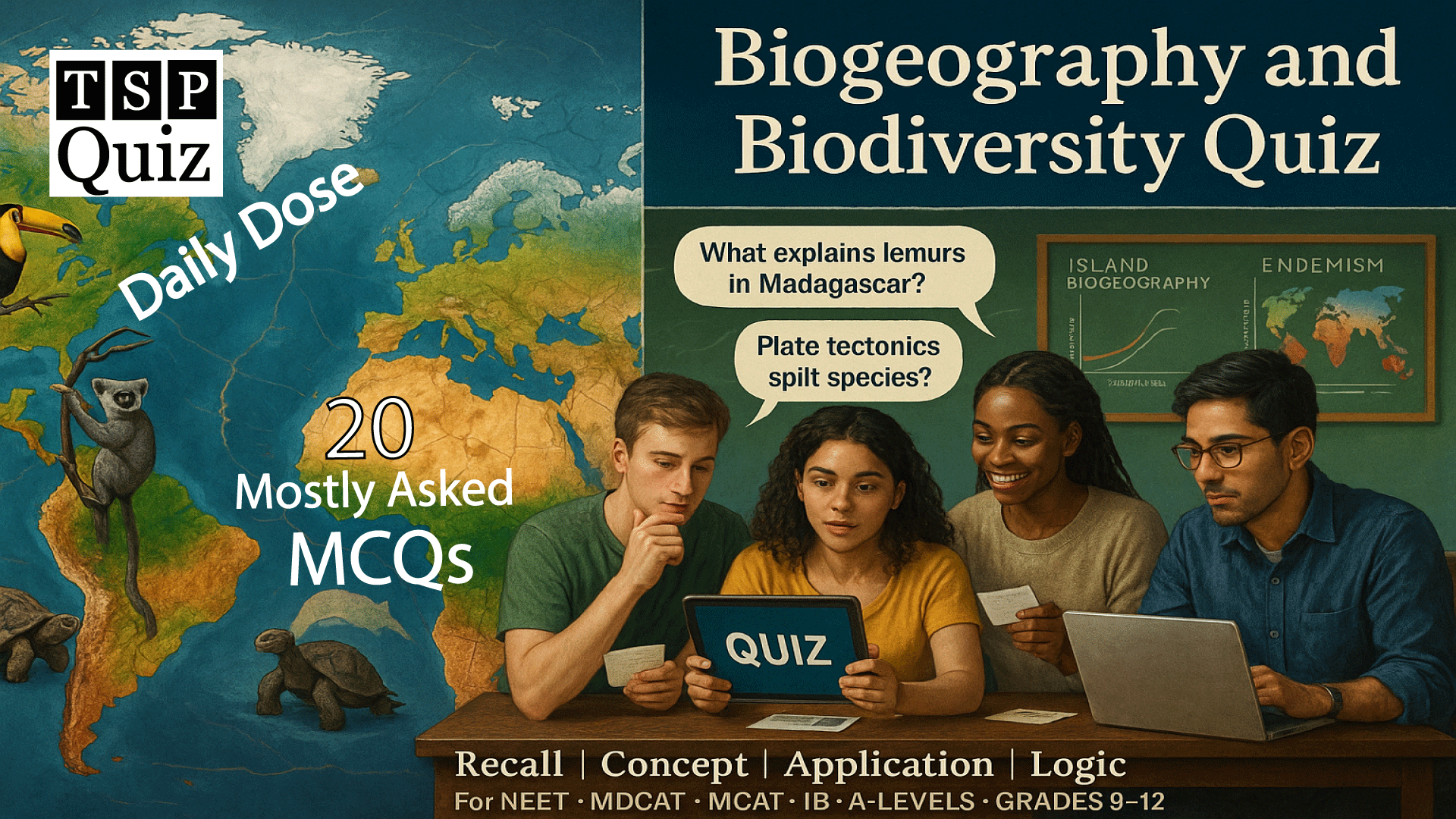
Biogeography and Biodiversity: A Concept-Based Quiz for Aspiring Medical Students
Attempt Biogeography and Biodiversity Quiz
Discover the wonders of life’s diversity in our “Biogeography and Biodiversity” quiz—then visit here to explore more exciting and interactive biology quizzes that make learning fun!
FAQs: Biogeography and Biodiversity
What is biogeography in biology, and why is it important?
Biogeography is the scientific study of how and why organisms are distributed across different geographical regions. It reveals patterns in where species live and how they adapt to local environments. This helps scientists understand species evolution, migration, and extinction. Therefore, it plays a critical role in both ecology and evolutionary biology.
How does biogeography support the theory of evolution?
Biogeography provides strong evidence for evolution by showing how species develop differently in separate areas. For example, species isolated on islands, like Darwin’s finches, evolve traits unique to their environment. This geographic isolation leads to speciation, which supports natural selection and evolutionary change over time.
What is biodiversity, and how is it related to biogeography?
Biodiversity refers to the variety of living organisms in a given habitat. Biogeography explains how this variety is spread across the planet. Because geography influences climate, habitat types, and isolation, it shapes how diverse and abundant species are in each region. Also, biodiversity hotspots often reflect unique biogeographical conditions.
Why are islands ideal for studying biogeography and biodiversity?
Islands provide isolated environments where scientists can study evolution in action. Limited resources and separation from mainland populations result in rapid changes among species. For example, animals on different islands often look and behave differently, even if they share a common ancestor. This makes islands perfect for evolutionary research.
How do climate and geography influence biodiversity patterns worldwide?
Climate and geography greatly affect species richness. Tropical zones with warm, stable climates usually support higher biodiversity. In contrast, deserts and polar areas have fewer species due to harsh conditions. However, even these regions show unique biodiversity shaped by environmental pressures.