
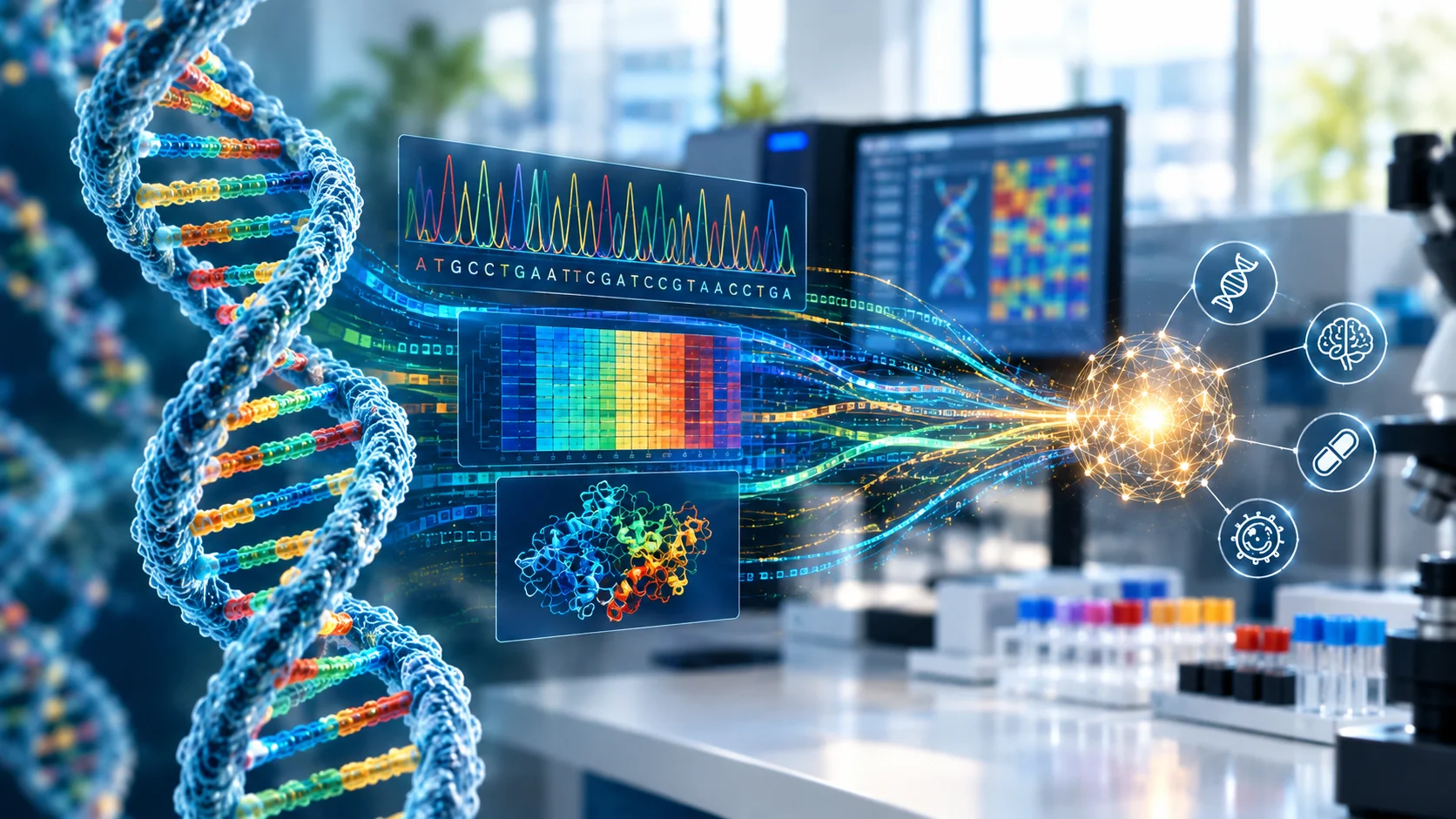
Genomic Sequencing: From DNA Reads to Discovery
Introduction
Genomic sequencing has transformed biological research by allowing scientists to examine DNA at an unprecedented level of detail. Instead of investigating only one gene at a time, researchers can generate millions to billions of DNA sequence reads and use computational methods to identify genetic variation, investigate biological mechanisms, and explore relationships between genotype and phenotype. These developments have expanded research in inherited disorders, cancer, infectious diseases, agriculture, microbial biotechnology, and evolutionary biology.
However, generating a DNA sequence is only the beginning. In other words, a sequencing instrument produces raw data rather than an automatic biological explanation. Therefore, researchers must assess data quality, align or assemble sequences, identify variants, evaluate their reliability, and interpret the results in the context of the research question. Consequently, errors at any stage can influence the final conclusions.
This article explores genomic sequencing as an analytical process, from sample preparation and sequencing technology to bioinformatics, variant interpretation, artificial intelligence, and responsible data use. It also explains why a technically accurate sequence does not always lead to a definitive diagnosis or a clear biological answer.
Note: For more information about what a genome is, its structure, and its importance in understanding life, read our detailed guide: What Is a Genome? A Student’s Guide to Life’s Instruction Manual.
What Is Genomic Sequencing?
Genomic sequencing is the process of determining the order of nucleotide bases i.e., adenine (A), thymine (T), cytosine (C), and guanine (G) in the DNA molecule of any living organisms. Depending on the study design, sequencing may target a specific genomic region, the protein-coding portions of genes, or a much larger proportion of an organism’s genome.
Modern sequencing platforms can process large numbers of DNA fragments in parallel. These fragments are computationally analysed to reconstruct sequence information and identify differences from a chosen reference or among individual samples.
The term genomic sequencing is often used broadly. However, researchers must distinguish sequencing from downstream analysis. Sequencing generates measurements; then, bioinformatics processes those measurements; finally, biological interpretation connects the results to a meaningful question.
For example, sequencing a patient’s DNA may reveal a rare variant in a gene associated with an inherited disorder. Nevertheless, clinicians must evaluate the variant alongside the patient’s clinical features, inheritance patterns, population frequency, functional evidence, and other relevant findings before establishing its significance.
Generations of DNA Sequencing: From Sanger Sequencing to Long-Read Technologies
The development of DNA sequencing technologies has progressively increased the speed, scale, and range of genomic analysis. Generally, researchers classify these sequencing methods as first-, second-, and third-generation technologies. Additionally, some discussions refer to fourth-generation sequencing, although researchers have not universally accepted this classification. Therefore, understanding these generations helps explain how modern genomic research investigates everything from individual DNA fragments to complex genomes and long-range structural variation.
First-Generation Sequencing: Sanger Sequencing
First-generation DNA sequencing is primarily represented by the Sanger method, developed by Frederick Sanger and colleagues in the 1970s. Specifically, the method uses DNA synthesis and chain-terminating nucleotides to determine the order of bases in a DNA fragment.
Moreover, Sanger sequencing typically produces relatively long, high-quality reads compared with conventional short-read sequencing, making it useful for targeted analysis. Today, laboratories continue to use it for confirming selected sequence variants, analysing individual genes or DNA fragments, and performing quality checks in certain workflows.
However, Sanger sequencing processes fewer DNA fragments at a time. In contrast, modern massively parallel platforms can sequence millions of fragments simultaneously. Therefore, analysing thousands of genes or entire genomes with this approach would be inefficient and expensive.
Key features:
- Technology: Chain-termination sequencing.
- Typical read length: Approximately 500–1,000 bases under suitable conditions.
- Main strength: Reliable sequencing of targeted DNA regions.
- Main limitation: Low throughput for large-scale genomic studies.
- Common applications: Targeted sequencing, plasmid verification, and confirmation of selected variants.
Second-Generation Sequencing: Massively Parallel Sequencing
Second-generation sequencing, also known as next-generation sequencing (NGS), transformed genomics. In particular,this technology enabled researchers to sequence millions of DNA fragments simultaneously. Instead of processing one DNA fragment at a time, these technologies generate large numbers of reads in a single run.
Platforms such as Illumina commonly use sequencing-by-synthesis chemistry. Researchers prepare DNA fragments as libraries, and the instrument records signals associated with nucleotide incorporation during DNA synthesis. Computational tools then analyse the resulting reads to reconstruct sequence information and identify genetic variation.
Second-generation sequencing supports whole-genome sequencing (WGS), whole-exome sequencing (WES), targeted gene panels, RNA sequencing, and many other applications. Its high throughput and established analytical workflows have made it central to contemporary genomic research.
A major limitation is that reads are generally short relative to many repetitive or structurally complex genomic regions. Consequently, some insertions, deletions, repeat expansions, and complex rearrangements may be difficult to resolve, depending on the region and analytical method.
Key features:
- Technology: Massively parallel sequencing, including sequencing-by-synthesis.
- Typical read length: Often around 50–300 bases, depending on the platform and configuration.
- Main strength: High throughput and cost-effective sequencing of large numbers of DNA fragments.
- Main limitation: Short reads can complicate the analysis of repetitive sequences and complex structural variants.
- Common applications: WGS, WES, targeted panels, RNA sequencing, and population genomics.
Third-Generation Sequencing: Long-Read Sequencing
Third-generation sequencing technologies analyse individual DNA molecules or otherwise generate long reads without relying on the same amplification-based workflows commonly used in many second-generation approaches. Two prominent technologies are Pacific Biosciences (PacBio) single-molecule real-time sequencing and Oxford Nanopore sequencing.
PacBio’s HiFi approach combines long DNA molecules with repeated measurements to generate highly accurate consensus reads. Meanwhile, Oxford Nanopore technology detects changes in electrical signals as DNA or RNA molecules pass through nanopores. Depending on sample preparation, molecule integrity, and the sequencing platform, read lengths can extend to tens of thousands of bases or considerably longer.
Long reads can span repetitive regions, connect distant variants on the same DNA molecule, and improve the detection and characterisation of structural variants. They can also help researchers assemble genomes and investigate haplotypes, certain repeat expansions, and complex genomic regions.
Nevertheless, each platform performs differently depending on the application. Furthermore, some long-read sequencing workflows require high-quality, high-molecular-weight DNA. Therefore, researchers must consider costs, throughput, accuracy profiles, and data analysis requirements when selecting a suitable method.
Key features:
- Technology: Single-molecule sequencing and nanopore-based signal detection.
- Typical read length: Several thousand to tens of thousands of bases, with much longer reads possible in suitable workflows.
- Main strength: Improved resolution of many repetitive regions, structural variants, and long-range genomic relationships.
- Main limitation: Results depend on platform-specific error profiles, DNA quality, analytical methods, and project requirements.
- Common applications: Genome assembly, structural-variant analysis, haplotype phasing, and selected transcript or epigenetic studies.
Fourth-Generation Sequencing: An Emerging and Non-Standard Label
Researchers sometimes use the term fourth-generation sequencing to describe emerging approaches that aim to detect DNA sequences or molecular properties more directly. Additionally, these approaches may integrate sequencing with real-time or in situ analysis. However, researchers have not yet established a universally accepted definition that groups all these methods into a single fourth generation.
Some proposed classifications associate this label with direct electronic detection, sequencing in cells or tissues, or approaches designed to reduce sample preparation. However, these concepts do not represent one standardised technology category. Furthermore, some overlap with existing third-generation methods or emerging experimental platforms.
For this reason, it is more accurate to describe a specific technology and its demonstrated capabilities rather than treating fourth-generation sequencing as an established, uniform successor to third-generation sequencing.
Key features:
- Technology: Depends on the proposed classification and specific platform.
- Main potential advantage: More direct, rapid, or spatially informed molecular analysis in selected approaches.
- Main limitation: The category is not standardised, and performance and clinical utility must be evaluated for each technology.
- Current status: An emerging umbrella term rather than a universally recognised sequencing generation.
Comparison of DNA Sequencing Generations
| Feature | First generation | Second generation | Third generation | Fourth generation |
| Representative approaches | Sanger sequencing | Illumina and other massively parallel platforms | PacBio HiFi and Oxford Nanopore | No universally agreed category |
| Typical sequencing scale | Individual DNA fragments | Millions of fragments in parallel | Many individual long DNA molecules | Depends on the proposed method |
| Read length | Hundreds to around 1,000 bases | Usually tens to hundreds of bases | Thousands to tens of thousands of bases or longer | Platform-dependent |
| Main advantage | Targeted, high-quality sequencing | High throughput and scalable analysis | Long-range sequence information | Potentially more direct or integrated measurements |
| Major limitation | Low throughput | Short-read limitations in complex regions | Platform- and sample-dependent constraints | Classification and performance are not standardised |
| Common role | Targeted sequencing and confirmation | WGS, WES, panels, RNA sequencing | Genome assembly and structural-variant analysis | Emerging or specialised applications |
Important clarification: Sequencing generations describe broad technological developments, not a strict ranking in which newer is always better. Sanger sequencing remains valuable for some targeted tasks, second-generation sequencing is highly effective for many large-scale studies, and long-read sequencing can be particularly useful when complex genomic regions need to be resolved. The best method depends on the research question, the variant class, the required accuracy, and available resources.
How Does a Genomic Sequencing Experiment Work?
A reliable genomic study requires a carefully designed workflow. Although the details differ between platforms and applications, most projects follow several connected stages.
Define the Research Question
Before collecting samples, researchers must decide what they want to discover. Are they investigating a suspected inherited disorder, comparing tumour and normal tissue, identifying a microbial species, or studying genetic diversity in a crop?
The research question determines the sample type, sequencing strategy, analytical pipeline, controls, and statistical methods. For example, a study of rare inherited disease may require trio sequencing of an affected individual and both biological parents, whereas a population-genomics project may require carefully selected samples from many unrelated individuals.
An unsuitable study design can limit the conclusions even when sequencing quality is excellent.
Collect Samples and Extract DNA
Biological material may come from blood, saliva, tissue, cultured cells, plants, or microorganisms. The appropriate sample depends on the biological question and the DNA source of interest.
DNA extraction separates nucleic acids from other cellular components. Laboratories assess DNA quantity, purity, and integrity before proceeding. Contamination, degradation, insufficient material, or sample mix-ups can compromise later analyses.
Sample identity and traceability are particularly important in studies involving multiple family members, tumour specimens, or large population cohorts.
Prepare the Sequencing Library
In many sequencing workflows, extracted DNA is converted into a sequencing library. This commonly involves fragmenting DNA, adding platform-specific adapter sequences, and sometimes enriching selected genomic regions.
Whole-genome sequencing generally aims to represent DNA across the genome, while whole-exome sequencing enriches regions associated primarily with protein-coding exons. Targeted panels focus on selected genes or genomic regions relevant to a particular question.
Library preparation can introduce bias. Some regions are difficult to capture or sequence because of their GC content, repetitive sequence, structural complexity, or other technical characteristics. Consequently, a region not adequately represented in the data cannot be interpreted with the same confidence as a well-covered region.
Generate Sequence Reads
The sequencing instrument measures nucleotide information and produces digital output, commonly represented as short or long sequence reads accompanied by quality scores.
Different platforms use different chemistries and produce different read lengths, error profiles, throughput, and costs. Short-read platforms are widely used for many applications, while long-read technologies can be particularly useful for investigating repetitive regions, complex structural variants, and haplotypes.
No single platform is optimal for every research question. Technology selection should reflect the variants of interest, the quality requirements, available resources, and the limitations of the intended analytical pipeline.
Perform Quality Control
Quality control (QC) evaluates whether the sequencing data are suitable for analysis. Common metrics include read quality, sequencing depth, mapping rate, duplication, contamination, coverage uniformity, and sample identity.
Sequencing depth refers to how many times a genomic position is represented by sequencing reads. Greater depth can improve the detection of some variants, particularly when a variant is present at a low proportion of reads. However, depth alone does not guarantee accuracy: systematic errors, mapping problems, and sample contamination can still produce misleading results.
Researchers should examine QC metrics before interpreting findings and document any limitations that could affect the conclusions.
Align Reads or Assemble the Genome
Many short-read workflows align sequencing reads to a reference genome. The resulting alignment files help researchers determine where each read belongs and identify differences between the sample and the reference.
Alternatively, de novo assembly reconstructs sequence information without relying entirely on a pre-existing reference. This approach is valuable when studying organisms with incomplete references, novel microbial genomes, or regions where reference-guided mapping is problematic.
Reference genomes are analytical resources, not perfect representations of every individual or population. Divergence from the reference can influence mapping and variant detection, particularly for complex genomic regions or populations underrepresented in reference datasets.
Identify and Annotate Variants
After alignment or assembly, a variant-calling pipeline identifies candidate differences, including single-nucleotide variants (SNVs), small insertions and deletions (indels), and, where supported by the method, larger structural changes and copy-number variants.
Variant annotation adds information that helps researchers interpret these findings. An annotation workflow may identify the affected gene, transcript, predicted protein consequence, population frequency, known disease associations, and available functional evidence.
Annotation is not the same as interpretation. A database entry or a computer-generated prediction can support an assessment, but neither independently proves that a variant causes a disease. Analytical limitations and the quality of the underlying evidence must also be considered.
Major Genomic Sequencing Technologies Compared
Different sequencing approaches answer different questions. The choice should depend on the genomic regions of interest and the type of variation being investigated.
| Approach | Main focus | Typical strengths | Important limitations |
| Whole-genome sequencing (WGS) | Broad assessment of genomic DNA | Can examine coding and non-coding regions and detect multiple variant classes, depending on the platform and pipeline | Data interpretation, cost, and difficult genomic regions remain challenging |
| Whole-exome sequencing (WES) | Primarily protein-coding exons | Often useful for investigating suspected Mendelian disorders | May miss causal variants outside captured regions and some structural or poorly covered variants |
| Targeted gene panels | Selected genes or regions | Focused analysis, often with high depth | Restricted to the selected targets and the design’s detectable variant classes |
| Short-read sequencing | Relatively short DNA fragments | High throughput and established analysis workflows | Repetitive regions, complex rearrangements, and haplotype reconstruction may be difficult |
| Long-read sequencing | Longer DNA molecules | Can help resolve repeats, structural variants, and long-range sequence relationships | Performance, cost, DNA requirements, and error characteristics depend on the platform and application |
| RNA sequencing | RNA-derived transcript information | Can examine gene expression, splicing, and abnormal transcripts | Does not replace DNA sequencing and is affected by tissue, biological state, and RNA quality |
Important distinction: RNA sequencing is not DNA genome sequencing in the strict sense. It is included here because transcript-level data can complement genomic findings, especially when researchers investigate abnormal splicing or the functional consequences of DNA variants.
Similarly, whole-genome sequencing does not automatically identify every possible variant. Detection depends on the sequencing technology, coverage, sample type, analysis pipeline, and genomic region. A recent meta-analysis found that genome sequencing established molecular diagnoses in approximately 7% more patients after a negative exome result, although reanalysis of existing exome data provided comparable additional yield that highlighting the importance of periodic reinterpretation (Albuquerque et al., 2025).
Bioinformatics: Turning Sequence Reads into Usable Data
Genomic sequencing produces large datasets that require specialised computational analysis. Bioinformatics combines algorithms, statistical methods, reference resources, and biological knowledge to transform raw reads into interpretable results.
A typical analysis may include:
- Read processing: assessing quality and, where appropriate, trimming adapters or low-quality sequence.
- Alignment or assembly: placing reads against a reference or reconstructing sequence without one.
- Variant calling: identifying candidate differences between the sample and the reference.
- Variant annotation: connecting candidates to genes, transcripts, population frequencies, and existing evidence.
- Filtering and prioritisation: reducing a large candidate list according to the study question and evidence.
- Validation and reporting: assessing whether important findings are sufficiently reliable for the intended use.
The exact pipeline varies by organism, platform, variant class, and research objective. A workflow designed to detect single-nucleotide variants may not perform equally well for repeat expansions, complex structural variants, mitochondrial heteroplasmy, or low-frequency somatic variants.
Reproducibility is another essential consideration. Researchers should document software versions, reference genome builds, filtering criteria, relevant parameters, and quality thresholds. Without this information, results may be difficult to reproduce or compare across studies.
From Candidate Variants to Biological Meaning
Variant interpretation is one of the most demanding stages of genomic analysis. A sequencing experiment may identify thousands of differences between an individual and the reference genome, and many are normal human variation rather than causes of disease.
Why Variant Frequency Matters
Population databases can help determine whether a variant is common or rare in the populations represented. A variant that is too common to fit a proposed rare disorder may be less likely to explain that condition.
However, rarity alone does not establish pathogenicity. A rare variant may be harmless, while a disease-causing variant may be more frequent in a particular population than in others. Database representation, ancestry, sample size, and data quality all affect interpretation.
Inheritance Patterns and Clinical Features
Researchers assess whether a candidate variant fits the suspected mode of inheritance, such as autosomal dominant, autosomal recessive, X-linked, or mitochondrial inheritance. Family segregation studies can help establish whether a variant tracks with a phenotype, although segregation evidence must be interpreted carefully.
Clinical features also matter. A candidate gene associated with the patient’s presentation may deserve greater attention than a gene with no established relationship to the phenotype. Conversely, an apparently plausible match may be coincidental, especially when the phenotype is broad or several conditions share similar features.
Functional and Experimental Evidence
Computational predictions can estimate whether a variant might affect protein structure, splicing, gene regulation, or other molecular processes. These predictions are useful for prioritisation but are not substitutes for experimental evidence.
Depending on the question, functional investigation may include RNA studies, protein assays, cellular experiments, model organisms, or other validated approaches. The appropriate method depends on the suspected mechanism and the biological system being studied.
For clinical interpretation, the ACMG/AMP framework provides widely used criteria for classifying sequence variants into five categories: pathogenic, likely pathogenic, uncertain significance, likely benign, and benign (Richards et al., 2015). These categories reflect the strength of available evidence, not simply the rarity of a variant or the output of a prediction program.
A variant of uncertain significance (VUS) should not automatically be treated as the explanation for a patient’s condition. Additional evidence may be needed before its clinical meaning can be established. This burden of uncertain variants remains a significant challenge in clinical genomics, particularly in hereditary cancer testing where WES often identifies numerous VUS requiring careful evaluation (Dell’Elice et al., 2026).
Applications of Genomic Sequencing
Rare and Inherited Disorders
Genomic sequencing can help investigate conditions in which symptoms suggest an inherited disorder but conventional testing has not identified the cause. WES and WGS may reveal candidate variants in known disease-associated genes and can sometimes support diagnoses involving complex or unexpected genetic findings.
Nevertheless, a negative result does not rule out a genetic condition. The cause may lie in a region that was poorly covered, a variant class that the method cannot reliably detect, a gene not yet linked to the condition, or a mechanism not adequately understood.
Cancer Genomics
Cancer sequencing can identify somatic variants that arise in tumour cells and help characterise molecular changes associated with tumour development. Depending on the clinical setting, molecular findings may inform tumour classification, prognosis, eligibility for certain targeted therapies, or enrolment in clinical trials.
Tumour findings require careful interpretation. A variant detected in tumour tissue may be acquired rather than inherited, and the presence of a molecular alteration does not guarantee that a particular treatment will work. Clinical decisions depend on validated evidence, the cancer type, other patient-specific factors, and applicable guidelines.
Pharmacogenomics
Pharmacogenomics examines how genetic variation influences drug response, including differences in metabolism, efficacy, and risk of adverse reactions. Genomic information can support prescribing decisions for certain medicines when robust gene–drug evidence and appropriate clinical guidance are available.
However, genetic factors are only one part of drug response. Age, organ function, other medications, disease status, and environmental influences can also affect outcomes.
Infectious Disease and Microbial Genomics
Sequencing microbial genomes can help researchers investigate pathogen diversity, transmission, antimicrobial resistance, and evolutionary relationships. In public health, genomic data can complement epidemiological information during investigations of outbreaks.
The sequence alone does not always establish where an infection originated or how transmission occurred. Sampling, timing, clinical information, and epidemiological evidence are needed to support such conclusions.
Agriculture and Animal Breeding
Genomic data can help researchers identify genetic markers associated with crop traits, livestock characteristics, and resistance to particular diseases. In breeding programmes, genomic information may improve the selection of plants or animals when combined with suitable population data and validated models.
The value of genomic predictions depends on the quality and representativeness of the training population, the trait being studied, and the environment in which the selected organisms will be grown or raised.
Population and Evolutionary Research
Population genomics uses variation across many individuals to investigate genetic diversity, demographic history, migration, adaptation, and relationships among populations. Such studies can illuminate evolutionary processes, but interpretations must account for sampling design, demographic complexity, and uncertainty in statistical models.
Genetic patterns should not be used to make simplistic assumptions about an individual’s identity, abilities, or social characteristics.
Artificial Intelligence in Genomic Analysis
Artificial intelligence (AI) and machine learning are increasingly used to support several stages of genomic research. Depending on the task, these methods can assist with sequence analysis, variant prioritisation, prediction of molecular effects, interpretation of regulatory regions, and integration of genomic information with clinical or other biological data.
Their usefulness depends on the training data, model design, evaluation strategy, and intended application. A model may perform well on a benchmark dataset but perform less reliably on data from a different sequencing platform, laboratory, ancestry group, or clinical setting. A recent scoping review of AI in genomics found that methodological quality across studies was uneven, with substantial heterogeneity in validation strategies and limited reporting on interpretability and governance (Pakpahan et al., 2026). Another review focused on variant prediction highlighted the persistence of variants of uncertain significance as a central challenge, emphasizing the need for explainable AI frameworks and more inclusive genomic databases to improve predictive accuracy across diverse populations (Pakpahan et al., 2026).
Researchers should distinguish between prediction and proof. An AI system may estimate that a variant is likely to affect a protein or prioritise a gene for investigation, but these outputs do not independently establish a disease mechanism or confirm a clinical diagnosis. Independent validation, transparent performance assessment, and appropriate expert review remain important.
AI-assisted analysis can be particularly valuable when it helps researchers handle complex datasets more efficiently. However, automation does not eliminate the need for sound study design, quality control, biological reasoning, and critical evaluation of the evidence.
Challenges That Still Limit Genomic Sequencing
Despite substantial progress, genomic analysis faces several technical and interpretive challenges.
- Incomplete detection: Some regions are difficult to sequence or analyse, and different methods vary in their ability to detect particular variant classes.
- Uncertain interpretation: Many variants lack sufficient evidence to determine their biological or clinical significance.
- Reference bias: Reference genomes and population databases may represent some populations better than others, potentially reducing analytical performance or interpretive confidence for underrepresented groups.
- Data management: Genomic datasets can be large and computationally demanding, requiring appropriate infrastructure, secure storage, and documented analytical procedures.
- Cost and access: Sequencing costs are only one component of a genomic study. Sample collection, laboratory quality assurance, computational resources, interpretation, counselling, and follow-up may also require substantial investment.
- Privacy and consent: Genomic data can reveal information about the person tested and biological relatives. Responsible research therefore requires appropriate consent, access controls, governance, and careful consideration of data-sharing risks.
The World Health Organization’s guidance on human genome data collection, access, use, and sharing emphasises responsible data governance, equity, and the protection of individual and community interests (World Health Organization, 2024). These issues are particularly important when studies involve populations that have historically been underrepresented in genomic research.
The Future of Genomic Sequencing
Future progress will depend not only on generating more sequence data but also on improving the accuracy, accessibility, and interpretability of genomic analysis. Better long-read methods, more comprehensive reference resources, improved variant-calling pipelines, and stronger integration of DNA, RNA, and clinical information may help resolve questions that remain difficult today. Long-read sequencing is already demonstrating additional diagnostic yield of 7–17% following negative short-read genome sequencing in undiagnosed rare disease cohorts (Del Gobbo et al., 2025).
Population diversity is another priority. Research that includes a wider range of ancestries can improve the evidence available for interpreting variants and help reduce disparities in genomic medicine. Building local laboratory, bioinformatics, and counselling capacity is equally important if the benefits of sequencing are to extend beyond well-resourced research centres.
For countries such as Pakistan, genomic research can contribute to the study of inherited disorders, locally relevant disease patterns, microbial diversity, agricultural traits, and population-specific variation. Responsible progress requires appropriate consent, reliable laboratory methods, robust computational analysis, collaboration, and careful protection of participant data.
Ultimately, the future of genomic sequencing will be shaped by the quality of the questions researchers ask and the strength of the evidence they use to answer them.
Conclusion
Genomic sequencing is much more than reading DNA bases. It is a coordinated process that combines experimental design, laboratory methods, sequencing technologies, bioinformatics, statistical analysis, and biological interpretation. Each stage influences the reliability of the final result.
By distinguishing raw sequence data from validated biological conclusions, researchers can make better use of genomic technologies while avoiding overinterpretation. As sequencing methods, computational tools, and reference resources continue to improve, genomic analysis will remain an important foundation for investigating disease, understanding biological diversity, and developing evidence-based applications across medicine, agriculture, and biotechnology.
Frequently Asked Questions
What is genomic sequencing used for?
Genomic sequencing is used to investigate genetic variation, study inherited disorders, characterise tumours and pathogens, examine population diversity, and support research in agriculture and biotechnology. Its value depends on the study design and the ability to interpret the results reliably.
What is the difference between whole-genome and whole-exome sequencing?
Whole-genome sequencing aims to analyse DNA across the genome, whereas whole-exome sequencing focuses mainly on protein-coding exons. WGS offers broader genomic coverage in principle, but neither approach guarantees the detection or interpretation of every clinically or biologically relevant variant.
Does genomic sequencing always identify the cause of a genetic disease?
No. A test may produce a negative result or identify variants whose significance is uncertain. Some variants are difficult to detect, and some disease mechanisms or genes remain unknown. Results must be interpreted in the context of the individual’s clinical and family information.
Can AI interpret genomic data accurately?
AI can help prioritise variants and predict possible molecular effects, but its reliability varies by task and dataset. Predictions require appropriate validation and should not be treated as independent proof of pathogenicity or a substitute for clinical assessment (Pakpahan et al., 2026).
Why is bioinformatics important in genomic sequencing?
Bioinformatics converts raw sequencing output into structured information through quality control, alignment or assembly, variant detection, annotation, and prioritisation. Without appropriate computational analysis, the biological meaning of most large-scale sequencing datasets cannot be assessed reliably.
Is genomic sequencing the same as genetic testing?
Genomic sequencing is one method used in genetic testing. Genetic testing can also involve targeted genotyping, chromosome analysis, repeat-expansion testing, biochemical methods, or other approaches. The appropriate test depends on the condition and the type of genetic change being investigated.
References
Genomic Sequencing and Diagnostic Yield
- Albuquerque, A. L. B., Dos Santos, G. G., Sadok, S. H., Antonello, B. B., de Jesus, L. M., de Carvalho, M. E. A., Mutarelli, A., & Ribeiro, P. V. Z. (2025). Diagnostic yield of genome sequencing versus exome sequencing in pediatric patients with rare phenotypes: A systematic review and meta-analysis. American Journal of Medical Genetics Part A, 197(10), e64146. https://doi.org/10.1002/ajmg.a.64146 (Open Access)
- Dell’Elice, A., Lombardi, L., Anaclerio, F., Palmarini, C., Canale, N., Secondi, L., Stratta, G., Vitali, M., Tavoletta, M. S., Grossi, S., Babore, A., Milillo, C., Dovizio, M., Ballerini, P., Gatta, V., Stuppia, L., & Antonucci, I. (2026). Clinical utility of germline whole-exome sequencing beyond multigene panels in hereditary cancer. Genes, 17(9), 1102. https://doi.org/10.3390/genes17091102 (Open Access)
- Del Gobbo, G. F., & Boycott, K. M. (2025). The additional diagnostic yield of long-read sequencing in undiagnosed rare diseases. Genome Research, 35(4), 559–571. https://doi.org/10.1101/gr.279970.124 (Open Access)
- Moustakli, E., Christopoulos, P., Potiris, A., Zikopoulos, A., Mavrogianni, D., Karampas, G., Kathopoulis, N., Anagnostaki, I., Domali, E., Tzallas, A. T., Drakakis, P., & Stavros, S. (2025). Long-read sequencing and structural variant detection: Unlocking the hidden genome in rare genetic disorders. Diagnostics, 15(14), 1803. https://doi.org/10.3390/diagnostics15141803 (Open Access)
Artificial Intelligence in Genomic Analysis
- Pakpahan, I., Sihombing, M., Liu, H., Wang, M., Su, Z., & Fang, M. (2026). Harnessing artificial intelligence for genomic variant prediction: Advances, challenges, and future directions. GigaScience, 15, giag004. https://doi.org/10.1093/gigascience/giag004 (Open Access)
Variant Interpretation Standards
- Richards, S., Aziz, N., Bale, S., Bick, D., Das, S., Gastier-Foster, J., Grody, W. W., Hegde, M., Lyon, E., Spector, E., Voelkerding, K., Rehm, H. L., & ACMG Laboratory Quality Assurance Committee. (2015). Standards and guidelines for the interpretation of sequence variants: A joint consensus recommendation of the American College of Medical Genetics and Genomics and the Association for Molecular Pathology. Genetics in Medicine, 17(5), 405–424. https://doi.org/10.1038/gim.2015.30(Open Access)
Ethical and Policy Frameworks
- World Health Organization. (2024). Guidance for human genome data collection, access, use and sharing. World Health Organization. https://www.who.int/publications/i/item/9789240102149
About Author
Dr. Niamat Khan, PhD, is an Assistant Professor of Biotechnology and Genetic Engineering, a molecular geneticist, and a genomics researcher with over 19 years of teaching and research experience. His academic and research interests include human genetics, inherited genetic disorders, hereditary cancers, genomics, bioinformatics, and the application of artificial intelligence in genomic medicine.
Through The Scholar Post, Dr. Khan aims to make complex scientific concepts accessible to students, researchers, educators, and science enthusiasts. His articles combine scientific knowledge, research-based insights, and educational explanations to promote a deeper understanding of genetics, molecular biology, biotechnology, and emerging genomic technologies.
Learn more about his academic background, research interests, and professional journey: Dr. Niamat Khan, PhD – Author Profile
