

Implementing AI in Genomic Medicine: A Practical Framework
Introduction: Moving from Technology to Implementing AI in Genomic Medicine
From Core Technologies to Implementing AI in Genomic Medicine
Implementing AI in Genomic Medicine is not a technology rollout, it is a clinical transformation that lives or dies by governance, trust, and human oversight. Artificial intelligence (AI) is rapidly transforming genomic medicine by enabling faster, more accurate interpretation of complex genomic datasets and supporting precision medicine across diverse clinical settings. In our previous article, AI in Genomic Medicine: Core Technologies Explained, we explored the fundamental AI technologies—including machine learning, deep learning, natural language processing (NLP), large language models (LLMs), computer vision, and foundation models—that are reshaping genomic diagnostics. Together, these technologies improve disease-causing variant detection, pathogenicity prediction, phenotype recognition, literature synthesis, and evidence-based clinical decision-making.
The Organizational Challenge of Implementing AI in Genomic Medicine
Understanding these technologies, however, represents only the first step toward successful adoption. Healthcare organizations must also determine how to integrate AI safely and responsibly into routine clinical practice. This requires far more than installing new software. Institutions must establish robust governance frameworks, validate AI-generated findings, ensure regulatory compliance, safeguard patient privacy, integrate AI into existing laboratory and clinical workflows, and continuously monitor system performance.
Consequently, this article shifts the discussion from “what AI can do” to “how AI can be implemented responsibly”within real-world genomic medicine. Rather than focusing solely on computational innovation, we examine the organizational, clinical, technical, and regulatory processes required to translate AI-driven discoveries into safe, effective, and sustainable patient care.
Successful implementation of AI in genomic medicine requires much more than sophisticated algorithms (O’Connor & McVeigh, 2025; Al Souleiman & Al Souleiman, 2026). Long-term success depends on a structured implementation strategy that transforms computational predictions into clinically actionable knowledge while maintaining patient safety, scientific rigor, regulatory compliance, and professional oversight (Advancing genome-based precision medicine, 2025; Finlayson, 2026).
Importantly, AI should not be viewed as an independent diagnostic system. Instead, it functions as an integrated component of the clinical diagnostic pathway, supporting healthcare professionals at multiple stages of genomic analysis (Duong & Solomon, 2025; Changalidis et al., 2026). Each implementation stage builds upon the previous one, progressively converting raw genomic and clinical data into meaningful clinical insights through rigorous computational analysis, multidisciplinary expert review, and continuous quality improvement (Kim et al., 2024; Solomon, 2026).
What Healthcare Leaders Will Learn About Implementing AI in Genomic Medicine
By the end of this post, healthcare leaders will understand not only how AI is implemented in genomic medicine, but also how to establish governance, evaluate organizational readiness, manage implementation challenges, measure success, and build sustainable AI programs that improve patient outcomes.
Before exploring the practical implementation framework, it is helpful to understand how the core AI technologies discussed in the previous article align with different stages of clinical implementation. Figure 1 illustrates this progression, demonstrating how individual AI technologies contribute to transforming raw genomic information into clinically validated decisions.
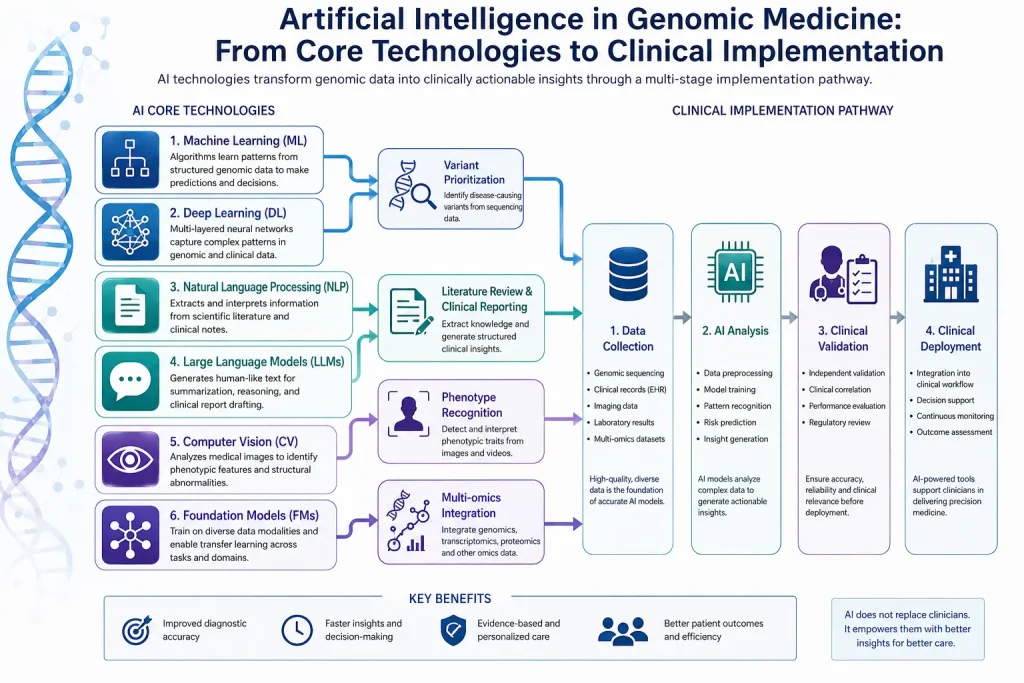
As illustrated in Figure 1, no single AI technology independently delivers clinical value. Instead, multiple AI approaches operate synergistically throughout the implementation pathway, with each contributing unique analytical capabilities at different stages of genomic medicine. This integrated perspective provides the conceptual foundation for the structured implementation framework presented below.
Key Takeaways
- Implementing AI in genomic medicine requires a structured four-stage process encompassing data acquisition, AI-driven analysis, clinical validation, and continuous deployment with performance monitoring (Al Souleiman & Al Souleiman, 2026; Advancing genome-based precision medicine, 2025).
- Human oversight remains indispensable throughout implementation. AI should be viewed as a collaborative clinical decision-support technology that augments—rather than replaces—the expertise of healthcare professionals (Kim et al., 2024; Duong & Solomon, 2025).
- Effective governance requires multidisciplinary collaboration among clinical geneticists, molecular pathologists, laboratory scientists, bioinformaticians, data scientists, information technology specialists, cybersecurity professionals, ethicists, and healthcare administrators (Solomon, 2026; O’Connor & McVeigh, 2025).
- Regulatory preparedness should begin during project planning rather than after deployment, facilitating smoother implementation and long-term compliance (Finlayson, 2026; Al Souleiman & Al Souleiman, 2026).
- Organizations that treat AI implementation as a long-term organizational transformation—rather than a one-time software installation—are substantially more likely to achieve sustainable improvements in genomic diagnostics and precision medicine (Solomon, 2026; Changalidis et al., 2026).
- Success should be measured using comprehensive organizational indicators, including diagnostic yield, turnaround time, clinician adoption, cost-effectiveness, patient safety, and regulatory compliance—not algorithmic accuracy alone (Advancing genome-based precision medicine, 2025; O’Connor & McVeigh, 2025).
Executive Summary for Healthcare Leaders
Strategic Priorities for Implementing AI in Genomic Medicine
Implementing AI in genomic medicine is a strategic organizational transformation rather than a standalone technology project. While AI has enormous potential to improve diagnostic accuracy, reduce interpretation time, and support precision medicine, successful implementation depends equally on governance, workforce readiness, data quality, regulatory compliance, and continuous clinical oversight.
For healthcare executives and laboratory leaders planning AI adoption, the following five priorities represent the most important organizational actions for achieving safe, effective, and sustainable implementation.
| Priority | Action Item | Expected Outcome |
| 1 | Establish multidisciplinary governance before AI deployment | Responsible oversight, accountability, and effective risk management |
| 2 | Begin with focused pilot projects | Reduced implementation risk and accelerated organizational learning |
| 3 | Invest in standardized, high-quality genomic and clinical data | Reliable AI performance and reproducible clinical results |
| 4 | Continuously monitor AI performance after deployment | Early detection of bias, calibration drift, and performance degradation |
| 5 | Engage clinicians throughout implementation | Improved adoption, transparency, trust, and patient safety |
These strategic priorities provide a high-level roadmap for successful implementation. The remainder of this post expands upon each recommendation, offering a practical framework for healthcare organizations seeking to integrate AI into genomic medicine responsibly and effectively.
A Four-Stage Framework for Implementing AI in Genomic Medicine
Having established the strategic priorities for AI adoption, the next step is to examine the practical implementation process. Figure 2 presents a structured four-stage framework that illustrates how healthcare organizations can systematically integrate artificial intelligence into genomic medicine while maintaining quality, safety, and continuous improvement.
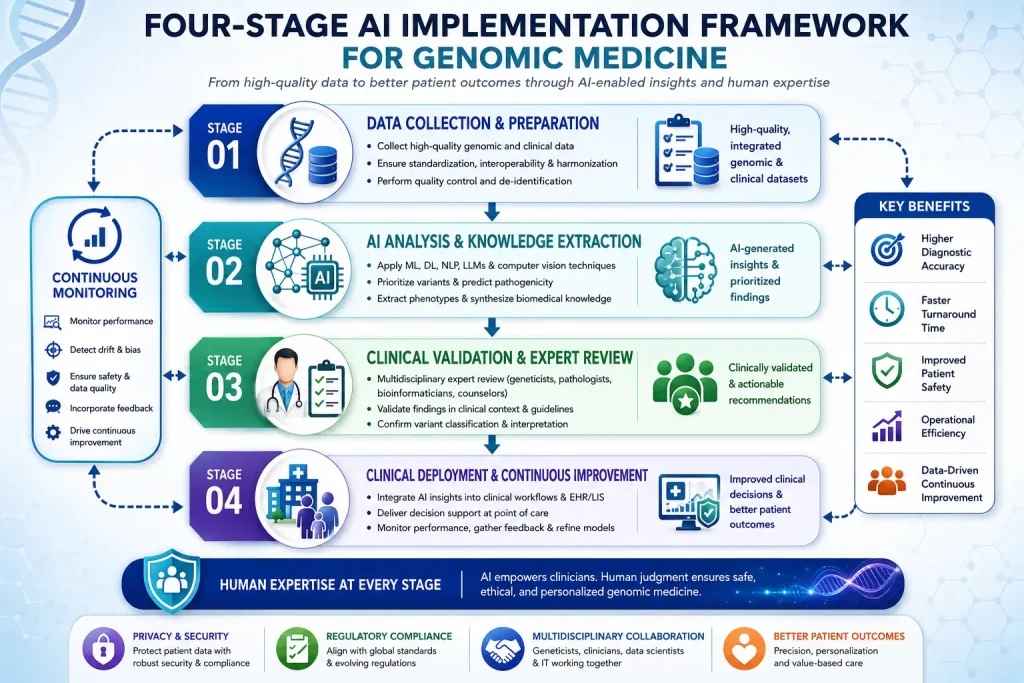
Stage 1: Data Collection: establishing high-quality genomic and clinical data through standardized collection, quality assurance, and data harmonization. 2: AI Analysis: applying machine learning, deep learning, NLP, and LLMs to extract clinically meaningful information from genomic and phenotypic data. 3: Clinical Validation: rigorous expert review by multidisciplinary teams including clinical geneticists, molecular pathologists, and bioinformaticians to validate AI-generated recommendations. 4: Clinical Deployment: integrating validated AI insights into routine clinical workflows through decision-support systems, followed by continuous monitoring and periodic model refinement.
The four-stage framework shown in Figure 2 serves as the foundation for the remainder of this post. Each stage represents a critical component of responsible AI implementation, beginning with high-quality data acquisition and progressing through AI-assisted analysis, expert clinical validation, and continuous deployment supported by ongoing monitoring and refinement.
Successfully implementing an AI in genomic medicine requires more than deploying advanced computational tools. It demands a structured implementation framework that integrates high-quality data, validated AI models, expert clinical oversight, and continuous quality improvement into routine healthcare practice. Rather than functioning as isolated steps, the four stages described below form an interconnected lifecycle in which each stage supports the next, ensuring that AI-generated insights are scientifically robust, clinically meaningful, and safe for patient care (Al Souleiman & Al Souleiman, 2026; Advancing genome-based precision medicine, 2025).
Together, these stages provide a practical roadmap for healthcare organizations seeking to translate AI innovation into sustainable clinical practice.
Stage 1: Implementing AI in Genomic Medicine: Data Acquisition and Preparation
Building the Foundation for Reliable Artificial Intelligence
Every successful AI implementation begins with high-quality data (Dara et al., 2025; O’Connor & McVeigh, 2025). Regardless of how sophisticated an AI algorithm may be, its predictive performance is fundamentally constrained by the quality, completeness, and representativeness of the data used during training and clinical deployment (Ilić & Sarajlija, 2025; Kim et al., 2024). Consequently, establishing robust data governance and standardized data preparation processes is the cornerstone of implementing AI in genomic medicine.
Clinical-grade genomic analysis requires accurate sequencing data, comprehensive phenotypic descriptions, reliable electronic health records (EHRs), detailed family histories, laboratory investigations, and well-curated reference databases (Duong & Solomon, 2025; Changalidis et al., 2026). Because these datasets originate from multiple sources and formats, laboratories must ensure that they are standardized, interoperable, and suitable for downstream computational analysis.
Key preprocessing activities performed during this stage include:
- Sequence quality assessment
- Read alignment
- Variant calling
- Variant normalization
- Data harmonization
- Clinical data standardization
- Quality assurance and quality control
These procedures minimize technical variability and improve the reliability and reproducibility of AI-assisted analyses (Solomon, 2026; Stein et al., 2025).Modern genomic medicine increasingly depends on integrating multiple data modalities—including genomic sequencing, clinical records, laboratory investigations, medical imaging, family history, and population databases—into a unified analytical environment (O’Connor & McVeigh, 2025; Al Souleiman & Al Souleiman, 2026). Establishing interoperable datasets during this stage enables downstream AI models to generate more accurate, reproducible, and clinically relevant predictions (Advancing genome-based precision medicine, 2025; Finlayson, 2026).
Healthcare organizations frequently underestimate the importance of data preparation. In practice, data acquisition, quality assurance, harmonization, and interoperability often require substantially more effort than AI model deployment itself. Investing in robust data infrastructure at the outset substantially improves long-term implementation success.
A large academic medical center implementing standardized genomic data collection protocols across affiliated hospitals could substantially reduce data harmonization efforts while improving downstream AI performance and cross-site reproducibility. Similar implementation strategies have consistently demonstrated improvements in data consistency and analytical performance across published genomic medicine initiatives
Stage 2: Implementing AI in Genomic Medicine: AI-Driven Analysis and Knowledge Extraction
Transforming Data into Clinically Actionable Knowledge
Once high-quality genomic and clinical datasets have been established, artificial intelligence begins extracting clinically meaningful information that would be difficult or time-consuming to identify through conventional bioinformatics alone (Changalidis et al., 2026; Li et al., 2026).
As discussed in our previous article, AI in Genomic Medicine: Core Technologies Explained, machine learning and deep learning algorithms prioritize candidate disease-causing variants, recognize complex genomic patterns, estimate pathogenicity, identify genotype–phenotype relationships, and assist clinicians in narrowing thousands of variants to a manageable set of high-priority candidates (Kim et al., 2024; Stein et al., 2025).
Simultaneously, natural language processing systems analyze electronic health records and clinical documentation to extract phenotypic features, while large language models accelerate literature review, evidence synthesis, guideline retrieval, and preliminary clinical report drafting (Li et al., 2026; Everton et al., 2026). When imaging data are available, computer vision algorithms contribute additional diagnostic information by analyzing facial morphology, retinal imaging, digital pathology, and radiological findings (Gurovich et al., 2019; Ilić & Sarajlija, 2025).
Rather than replacing traditional bioinformatics workflows, these technologies complement existing analytical pipelines by increasing efficiency, improving consistency, reducing manual workload, and enabling clinicians to focus on complex cases requiring expert interpretation (Duong & Solomon, 2025; Solomon, 2026).
AI delivers the greatest clinical value when multiple technologies are integrated within a unified workflow. Combining genomic analysis, phenotype extraction, literature synthesis, and multimodal data interpretation produces
Stage 3: Implementing AI in Genomic Medicine: Clinical Validation and Expert Review
Artificial intelligence can rapidly generate highly informative predictions; however, computational outputs should never be translated directly into patient care without comprehensive clinical validation (Finlayson, 2026; O’Connor & McVeigh, 2025). Every AI-generated recommendation must undergo rigorous review by qualified healthcare professionals before influencing diagnostic or therapeutic decisions (Al Souleiman & Al Souleiman, 2026; Advancing genome-based precision medicine, 2025).
During this stage, multidisciplinary teams—including clinical geneticists, molecular pathologists, laboratory scientists, bioinformaticians, and genetic counselors—evaluate AI-generated findings within the broader clinical context (Kim et al., 2024; Ilić & Sarajlija, 2025). Variant classifications are reviewed against established professional guidelines, published evidence, segregation analyses, functional studies, population databases, and patient-specific clinical information to ensure scientific validity and clinical relevance (Stein et al., 2025; Everton et al., 2026).
This collaborative review process minimizes algorithmic errors, reduces inappropriate clinical recommendations, and strengthens clinician confidence in AI-assisted diagnostics (Solomon, 2026; Duong & Solomon, 2025). Human oversight therefore remains the cornerstone of responsible AI implementation, ensuring that computational predictions support—but never replace—clinical judgment.
A tertiary referral center implementing a structured validation workflow in which AI-generated variant classifications are independently reviewed by two clinical geneticists before report issuance could substantially improve diagnostic consistency while reducing discordant variant interpretations, as demonstrated in recent implementation studies
Stage 4: Implementing AI in Genomic Medicine: Clinical Decision Support and Continuous
Sustaining Safe and Effective AI Implementation
After expert validation, AI-generated insights can be integrated into routine clinical workflows through decision-support systems that connect genomic findings with electronic health records, laboratory information systems, clinical practice guidelines, and multidisciplinary care pathways (Al Souleiman & Al Souleiman, 2026; Changalidis et al., 2026).
Within this environment, clinicians use AI-assisted recommendations to support diagnosis, therapeutic planning, prognostic assessment, treatment selection, and long-term patient management (Duong & Solomon, 2025; Solomon, 2026). Importantly, responsibility for every clinical decision remains with qualified healthcare professionals, while AI functions as an evidence-based advisory tool that improves efficiency, consistency, and access to current biomedical knowledge (Finlayson, 2026; Kim et al., 2024).
Implementation does not end once an AI system enters clinical practice (O’Connor & McVeigh, 2025; Advancing genome-based precision medicine, 2025). Continuous monitoring is essential to evaluate performance, detect calibration drift, identify emerging biases, ensure cybersecurity, monitor regulatory compliance, and incorporate clinician feedback into periodic model refinement (Al Souleiman & Al Souleiman, 2026; Ilić & Sarajlija, 2025). Through continuous learning, AI systems can evolve alongside advances in genomic medicine while maintaining safety, reliability, and clinical effectiveness (Solomon, 2026; Changalidis et al., 2026).
Clinical Workflow for AI-Assisted Genomic Medicine
From Patient Referral to Precision Medicine
While the four-stage implementation framework provides a strategic overview of organizational AI adoption, healthcare professionals often benefit from understanding how artificial intelligence integrates into routine clinical practice. Rather than functioning as a separate diagnostic pathway, AI is embedded within the existing genomic medicine workflow, where it supports clinicians by automating computationally intensive tasks, synthesizing biomedical evidence, and enhancing clinical decision-making while preserving expert oversight at every stage.
The AI-generated findings are subsequently evaluated through multidisciplinary clinical review involving clinical geneticists, molecular pathologists, laboratory scientists, bioinformaticians, and genetic counselors. During this stage, computational predictions are interpreted alongside clinical presentation, family history, laboratory findings, and established professional guidelines to ensure that diagnostic recommendations remain scientifically robust and clinically appropriate. Following expert validation, the findings are incorporated into clinical reports, communicated through genetic counseling, and used to support personalized treatment planning and precision medicine. Long-term patient follow-up provides additional clinical evidence that can be incorporated into periodic model refinement, enabling continuous learning and improving the performance of AI-assisted genomic medicine over time.
The Step-by-Step Clinical Workflow
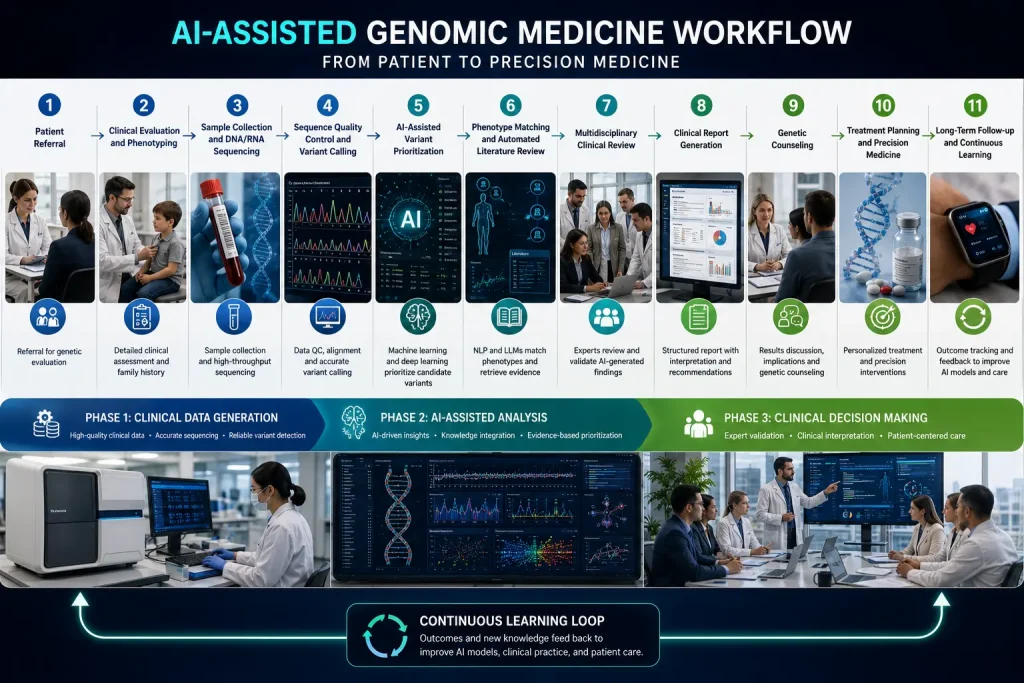
Figure 3 illustrates the end-to-end AI-assisted genomic medicine workflow, beginning with patient referral and clinical evaluation, followed by phenotyping, sample collection, DNA/RNA sequencing, sequence quality control, and variant calling. Once high-quality genomic data have been generated, machine learning and deep learning algorithms prioritize candidate variants based on their predicted pathogenicity and clinical relevance. Natural language processing extracts clinically meaningful phenotypic information from electronic health records, while large language models assist with automated literature review, evidence synthesis, and draft clinical report preparation.
AI Technologies Across the Clinical Pathway
As illustrated in Figure 3, artificial intelligence contributes at multiple stages of the genomic medicine pathway—from variant prioritization and phenotype interpretation to evidence synthesis and clinical reporting—while expert clinicians remain responsible for validating AI-generated findings and making final diagnostic and therapeutic decisions. This integrated workflow demonstrates that successful implementation of AI depends on the seamless collaboration of advanced computational technologies, high-quality genomic and clinical data, multidisciplinary expertise, robust governance, and continuous performance monitoring to ensure safe, effective, and patient-centered precision medicine.
The most successful AI implementations integrate seamlessly into existing laboratory and clinical workflows rather than creating parallel diagnostic processes. Compatibility with laboratory information systems (LIS), electronic health records (EHRs), genomic analysis pipelines, and multidisciplinary review meetings minimizes workflow disruption, strengthens clinician confidence, and accelerates organizational adoption. Consequently, implementation strategies should prioritize interoperability, user-centered system design, and continuous collaboration between clinicians, laboratory scientists, bioinformaticians, and information technology teams to maximize the clinical value of AI while maintaining patient safety and regulatory compliance.
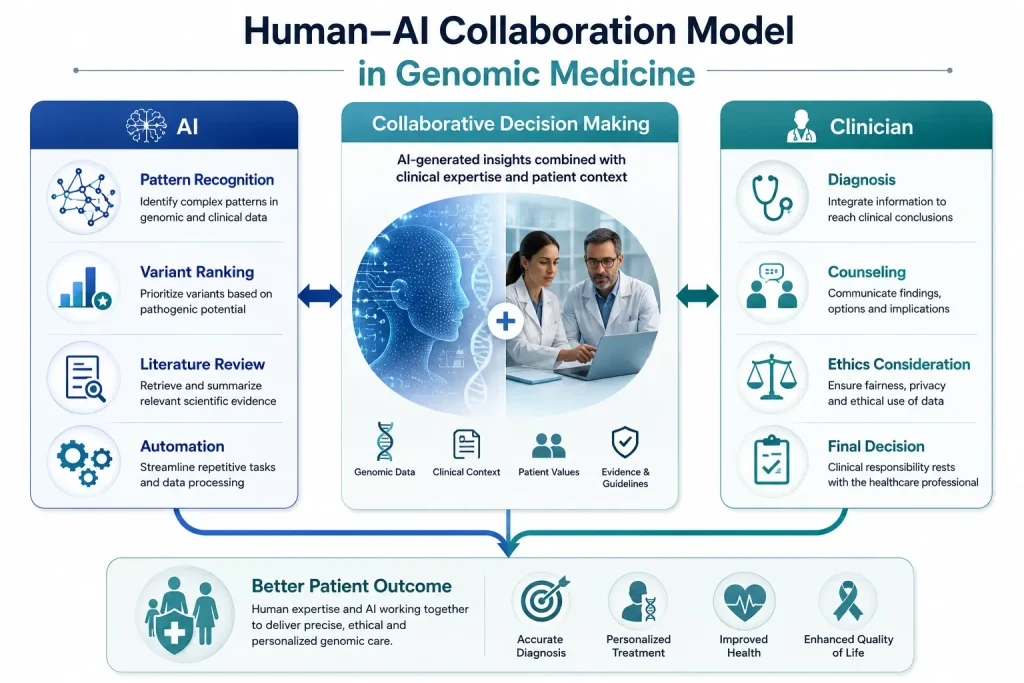
The implementation framework and clinical workflow demonstrate where artificial intelligence contributes throughout the diagnostic pathway. However, successful implementation ultimately depends on effective collaboration between AI systems and healthcare professionals. Figure 4 illustrates this complementary relationship, highlighting the distinct yet interconnected roles of artificial intelligence and clinical expertise in delivering high-quality genomic care.
Navigating the AI Platform Landscape
Having established the four-stage implementation framework, healthcare organizations must next determine which AI technologies and platforms are most appropriate for their clinical objectives. Platform selection is one of the most consequential decisions during AI implementation because it influences diagnostic performance, workflow integration, regulatory compliance, operational costs, and long-term sustainability.
The rapid evolution of artificial intelligence has created a diverse ecosystem of computational platforms supporting genomic medicine (Changalidis et al., 2026; Al Souleiman & Al Souleiman, 2026). These platforms differ considerably in their analytical capabilities, intended clinical applications, regulatory maturity, scalability, explainability, and level of clinical validation (Duong & Solomon, 2025; Kim et al., 2024).
Consequently, selecting an AI platform should not be regarded as a purely technical procurement exercise. Instead, it represents a strategic organizational investment that directly influences diagnostic quality, patient safety, clinician adoption, regulatory readiness, and future innovation (O’Connor & McVeigh, 2025; Advancing genome-based precision medicine, 2025).
Healthcare organizations should therefore begin by defining the specific clinical problems they aim to solve before evaluating available AI solutions. A platform designed for variant interpretation, for example, may not be appropriate for phenotype recognition or multimodal genomic analysis.
Categories of AI Platforms in Genomic Medicine
Although the AI marketplace continues to expand rapidly, most clinical genomic applications can be grouped into five major categories according to their primary clinical function. Understanding these categories enables healthcare leaders to align technology investments with organizational priorities while avoiding unnecessary complexity.
| Platform Type | Primary Function | Example Applications |
| Variant Interpretation | Pathogenicity prediction and variant prioritization | Rare disease diagnosis, hereditary cancer analysis |
| Phenotype Matching | Linking clinical features with genetic disorders | Syndrome recognition, differential diagnosis |
| Literature Assistance | Evidence retrieval and knowledge synthesis | Variant classification, clinical reporting |
| Clinical Decision Support | Integrating genomic findings into clinical workflows | Treatment planning, prognostic assessment |
| Foundation Models | Multimodal reasoning across diverse biomedical datasets | Multi-omics integration, complex case interpretation |
No single platform currently addresses every aspect of genomic medicine. Consequently, many institutions implement complementary AI solutions that collectively support laboratory operations, clinical interpretation, reporting, and multidisciplinary decision-making.
While understanding platform categories is important, organizations also require a structured method for selecting the most appropriate solution for their clinical environment. Figure 5 presents a practical decision framework that guides healthcare leaders through the major considerations involved in selecting AI platforms for genomic medicine.
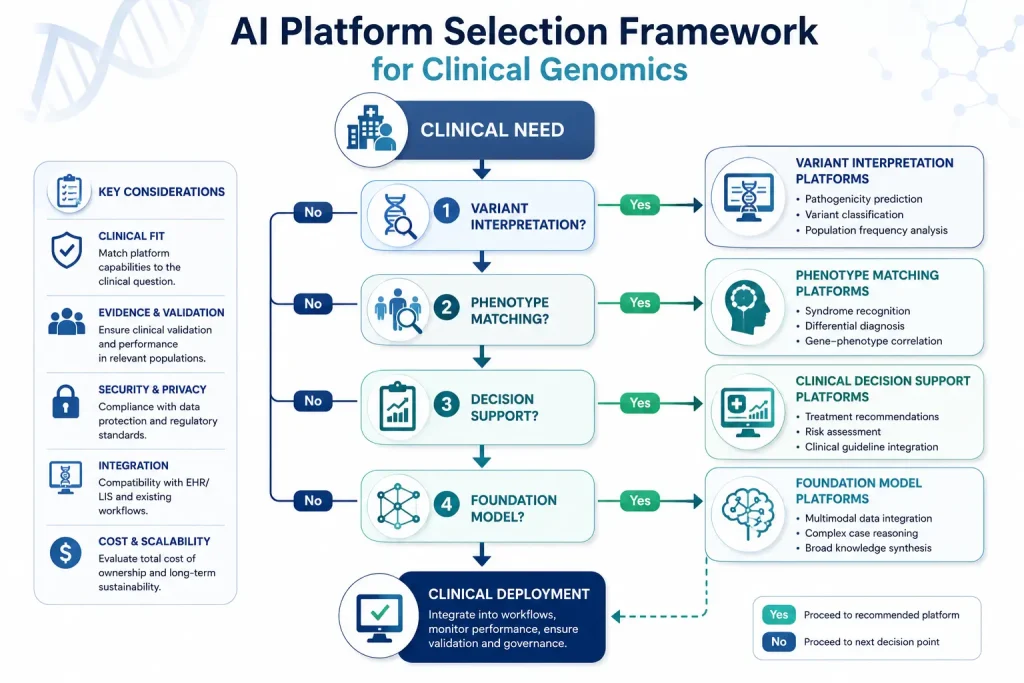
As illustrated in Figure 5, AI platform selection should always begin with a clearly defined clinical need rather than available technology. Once organizational objectives have been established, institutions can systematically evaluate candidate platforms based on clinical functionality, interoperability, validation evidence, regulatory requirements, and implementation readiness.
Choosing an AI Platform: Key Evaluation Criteria
Selecting an AI platform requires a structured evaluation extending far beyond predictive performance (O’Connor & McVeigh, 2025; Al Souleiman & Al Souleiman, 2026). Although algorithmic accuracy remains essential, successful implementation also depends on organizational readiness, infrastructure compatibility, workforce expertise, cybersecurity, regulatory compliance, and long-term vendor support (Advancing genome-based precision medicine, 2025; Finlayson, 2026).
Before making procurement decisions, healthcare organizations should consider the following questions:
- Has the platform been clinically validated using peer-reviewed evidence?
- Can it integrate seamlessly with existing electronic health records (EHRs) and laboratory information systems (LIS)?
- Is the AI model explainable enough to support clinician confidence and regulatory review?
- Does the vendor provide ongoing software updates, technical support, and cybersecurity maintenance?
- Has the platform been evaluated using patient populations representative of our healthcare setting?
- Can the organization support the computational infrastructure and workforce training required for successful implementation?
- Does the solution comply with applicable regulatory and privacy requirements?
Organizations addressing these questions early are substantially more likely to achieve sustainable AI adoption while minimizing implementation risks.
Even after selecting an appropriate platform, healthcare organizations inevitably encounter technical, organizational, financial, and regulatory challenges during implementation. Table 1 summarizes the most common barriers together with practical mitigation strategies supported by current evidence.
Table 1: Implementation Challenges and Mitigation Strategies
| Challenge | Clinical Impact | Recommended Mitigation | Priority Level |
| Data Quality | Inaccurate predictions, reduced model performance (Dara et al., 2025) | Establish standardized data collection, rigorous quality assurance, interoperable data formats (Duong & Solomon, 2025) | Critical |
| Algorithmic Bias | Reduced accuracy for underrepresented populations, health disparities (Ilić & Sarajlija, 2025) | Multi-ethnic training datasets, external validation across populations (Solomon, 2026) | Critical |
| Privacy Concerns | Patient confidentiality risks, data breach vulnerability (O’Connor & McVeigh, 2025) | Encryption, access controls, secure cloud environments, compliance with regulations (Al Souleiman & Al Souleiman, 2026) | Critical |
| Regulatory Uncertainty | Delayed approval, compliance challenges (Finlayson, 2026) | Early engagement with regulators, comprehensive documentation, quality management (Advancing genome-based precision medicine, 2025) | High |
| Limited Explainability | Reduced clinician trust, regulatory concerns (Kim et al., 2024) | Implement XAI methods: SHAP, LIME, attention visualization; develop intuitive interfaces (Li et al., 2026) | High |
| Infrastructure Costs | Financial burden, resource constraints (Dara et al., 2025) | Total cost of ownership assessment, phased implementation, cloud solutions (O’Connor & McVeigh, 2025) | High |
| Workforce Readiness | Low adoption, improper use of AI tools (Finlayson, 2026) | Comprehensive training, multidisciplinary collaboration, continuous education (Solomon, 2026) | High |
| External Validation | Poor generalizability across populations (Ilić & Sarajlija, 2025) | Independent validation across institutions, prospective clinical studies (Stein et al., 2025) | High |
Although these implementation challenges are presented individually, they frequently occur simultaneously during real-world deployment. Addressing them through coordinated governance, standardized workflows, workforce development, and continuous monitoring substantially increases the likelihood of successful AI implementation.
Common Implementation Mistakes
Lessons Learned from Early AI Adoption
Experience from early AI implementation programs demonstrates that technical excellence alone does not guarantee clinical success. Many organizations encounter avoidable challenges because implementation planning focuses primarily on software acquisition while overlooking governance, workforce readiness, and organizational change management.
The following implementation mistakes are among the most frequently reported across healthcare systems adopting AI in genomic medicine.
Strategic Mistakes:
- Prioritizing Technology Instead of Clinical Need: Successful implementation begins by identifying a clearly defined clinical problem rather than selecting an AI platform based solely on technological capabilities. Organizations should first determine where AI can deliver measurable improvements in patient care, laboratory efficiency, or diagnostic performance before evaluating software solutions.
- Viewing Implementation as a One-Time Project: Artificial intelligence continuously evolves. Organizations that treat implementation as a completed technology installation frequently struggle to maintain long-term performance. Sustainable programs require continuous monitoring, periodic model updates, cybersecurity reviews, workforce education, and governance oversight.
Data and Validation Mistakes:
- Underestimating Data Preparation: Many institutions devote substantial resources to AI software while overlooking the extensive effort required to standardize genomic data, harmonize electronic health records, establish quality assurance procedures, and develop interoperable databases. Poor-quality data remain one of the leading causes of disappointing AI performance.
- Inadequate Local Validation: Models performing well in published studies may not achieve comparable accuracy within different patient populations, sequencing platforms, or healthcare systems. Independent validation using local genomic datasets should therefore precede routine clinical deployment.
People and Culture Mistakes:
- Limited Clinician Engagement: Implementing AI without involving clinical geneticists, laboratory scientists, pathologists, and genetic counselors often results in reduced adoption and limited trust. Clinicians should participate throughout planning, validation, deployment, and ongoing system evaluation.
- Neglecting Change Management: Introducing AI inevitably changes clinical workflows and professional responsibilities. Successful implementation therefore requires effective communication, leadership support, structured training, and continuous feedback from end users throughout the implementation lifecycle.
Technical and Transparency Mistakes:
- Ignoring Explainability: Clinicians are understandably reluctant to rely on recommendations they cannot interpret. Incorporating explainable AI techniques improves transparency, facilitates multidisciplinary review, strengthens regulatory compliance, and increases clinician confidence.
Organizations achieving the greatest long-term success typically view AI implementation as an organizational transformation program rather than a software deployment project. Leadership commitment, multidisciplinary collaboration, and continuous improvement are often stronger predictors of success than algorithmic performance alone.
Many of these implementation mistakes arise from broader organizational and technical challenges. Figure 6 summarizes these interconnected barriers, illustrating the major issues healthcare organizations should anticipate when implementing AI in genomic medicine.
Challenges of Implementing AI in Genomic Medicine
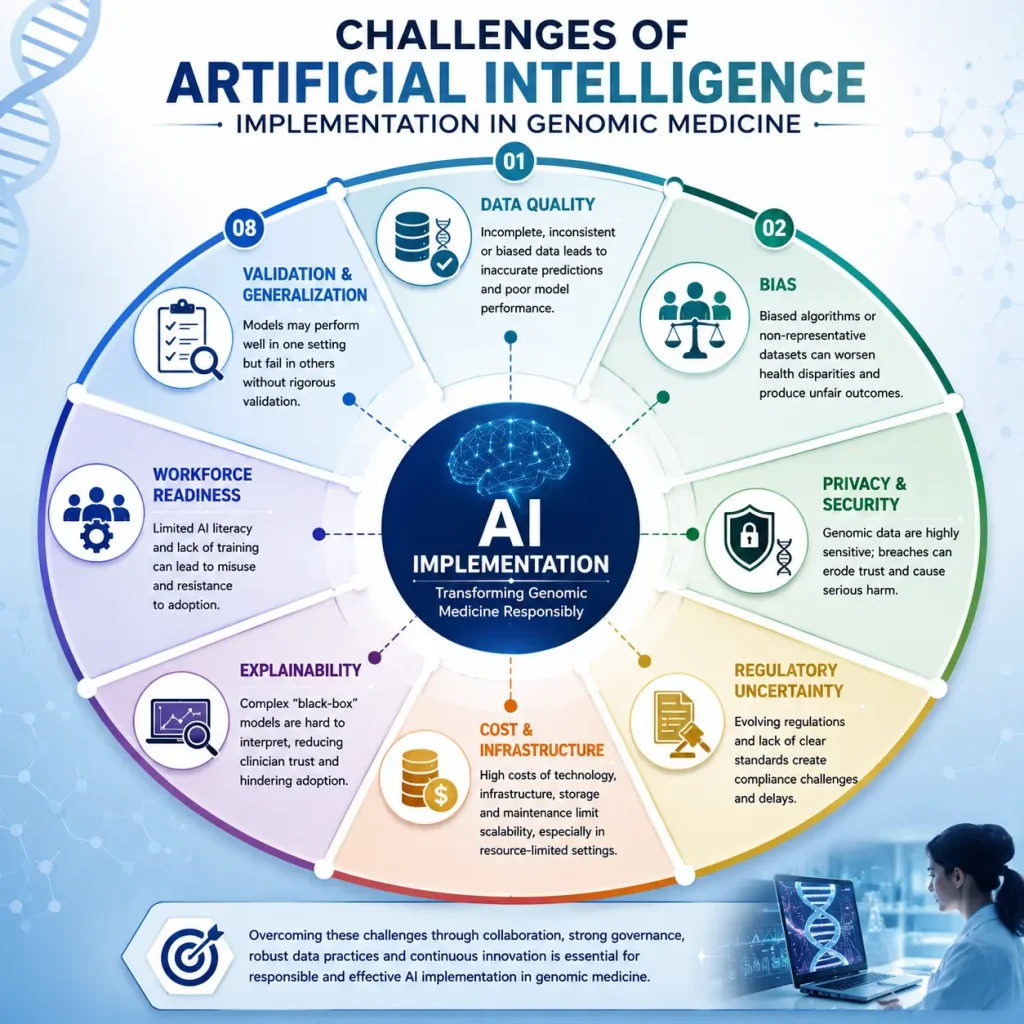
Understanding these challenges enables healthcare organizations to adopt proactive mitigation strategies before deployment. The next section builds upon these concepts by examining how institutions can establish sustainable AI programs supported by effective governance, leadership, workforce development, and continuous quality improvement.
Building a Sustainable AI Program
Implementing AI in genomic medicine should be viewed as a long-term organizational transformation rather than a one-time technological upgrade (O’Connor & McVeigh, 2025; Al Souleiman & Al Souleiman, 2026). Although advanced algorithms are essential, sustained success depends equally on strategic leadership, multidisciplinary governance, regulatory compliance, workforce engagement, financial planning, and continuous quality improvement (Solomon, 2026; Advancing genome-based precision medicine, 2025).Organizations that integrate these elements into a coordinated implementation strategy are better positioned to achieve lasting improvements in diagnostic quality, operational efficiency, clinician confidence, and patient outcomes.
Implementing AI in genomic medicine is not a one-time technology acquisition but a continuous organizational transformation (O’Connor & McVeigh, 2025; Al Souleiman & Al Souleiman, 2026). While sophisticated algorithms provide the analytical foundation, long-term success depends equally on leadership commitment, governance, workforce capability, regulatory preparedness, financial sustainability, cybersecurity, and continuous quality improvement (Solomon, 2026; Advancing genome-based precision medicine, 2025).
Organizations that consistently achieve successful AI implementation recognize that sustainable transformation requires coordinated investment across people, processes, technology, and organizational culture. AI should therefore be embedded within existing clinical governance structures rather than managed as an isolated information technology initiative.
Implementing AI in Genomic Medicine Roadmap
Successful implementation is most effective when introduced through a phased approach that allows organizations to evaluate progress, refine workflows, and build clinician confidence before expanding AI applications across additional clinical services.The implementation roadmap presented below outlines a practical sequence of milestones that organizations can adapt according to their institutional priorities and available resources.
Rather than attempting full-scale deployment from the outset, healthcare organizations should adopt a structured implementation timeline. Table 2 presents a recommended 12-month roadmap that guides institutions from organizational readiness assessment to sustainable AI deployment.
Table 2: AI Implementation Roadmap
| Timeframe | Milestone | Key Activities |
| Months 1–3 | Assess readiness and define use case | Leadership alignment; identify high-impact clinical problem; assess data infrastructure; secure funding |
| Months 4–6 | Prepare data infrastructure | Standardize data collection; establish quality assurance; ensure interoperability; address privacy/security |
| Months 7–9 | Validate AI models | Select platforms; validate on local population; establish external validation; train workforce |
| Months 10–12 | Pilot deployment | Integrate into workflows; monitor performance; gather clinician feedback; refine processes |
| Ongoing | Continuous monitoring and improvement | Track KPIs; detect drift; update models; maintain governance; expand to new use cases |
Although implementation timelines will vary among healthcare organizations, the principles underlying this phased approach remain broadly applicable. Progressing systematically through assessment, infrastructure preparation, validation, pilot deployment, and continuous monitoring substantially reduces implementation risk while supporting long-term organizational learning.
Establishing Robust Governance
Governance provides the organizational framework that ensures artificial intelligence systems are developed, validated, deployed, monitored, and retired responsibly throughout their lifecycle (Al Souleiman & Al Souleiman, 2026; O’Connor & McVeigh, 2025). Rather than functioning as an administrative requirement, governance establishes accountability, defines decision-making authority, manages clinical risk, and promotes transparency across every stage of AI implementation (Finlayson, 2026; Kim et al., 2024).
Effective governance should extend beyond algorithm approval to encompass data quality, cybersecurity, regulatory compliance, model performance monitoring, incident management, software updates, ethical oversight, and continuous quality improvement. By embedding AI within existing clinical governance structures, organizations can ensure that innovation proceeds without compromising patient safety or professional accountability.
A comprehensive governance committee should include representatives from multiple disciplines, including:
- Clinical geneticists
- Molecular pathologists
- Laboratory scientists
- Bioinformaticians
- Data scientists
- Information technology specialists
- Cybersecurity professionals
- Clinical informaticians
- Hospital administrators
- Ethicists
- Legal advisors
- Quality assurance professionals
This multidisciplinary structure enables organizations to evaluate AI systems from scientific, clinical, operational, ethical, legal, and financial perspectives simultaneously (Duong & Solomon, 2025; Solomon, 2026).
Clear governance policies should define responsibilities for:
- Model validation
- Clinical approval
- Deployment
- Performance monitoring
- Incident reporting
- Software maintenance
- Vendor management
- Regulatory documentation
- Periodic model recalibration
- Retirement of obsolete systems
Without these governance mechanisms, even technically robust AI platforms may become difficult to manage safely over time (Finlayson, 2026; Ilić & Sarajlija, 2025).
To assist healthcare organizations in evaluating their governance readiness, Table 3 provides a practical checklist covering the essential domains that should be addressed before routine clinical deployment.
Table 3: AI Governance Checklist
| Domain | Questions Organizations Should Ask | Status |
| Governance | Is there a multidisciplinary AI oversight committee? Are roles and responsibilities clearly defined? (Al Souleiman & Al Souleiman, 2026) | ☐ |
| Validation | Has the platform been validated on our patient population? Are there external validation studies? (Stein et al., 2025) | ☐ |
| Cybersecurity | Are encryption, access controls, and audit trails in place? Is there a data breach response plan? (O’Connor & McVeigh, 2025) | ☐ |
| Interoperability | Can the platform integrate with our EHR and laboratory information systems? (Advancing genome-based precision medicine, 2025) | ☐ |
| Workforce | Are clinicians trained to interpret AI recommendations? Is ongoing education provided? (Solomon, 2026) | ☐ |
| Monitoring | Is model performance continuously tracked? Are there alerts for performance degradation? (Finlayson, 2026) | ☐ |
| Regulation | Is the platform compliant with applicable regulatory frameworks? Is documentation maintained? (Al Souleiman & Al Souleiman, 2026) | ☐ |
Organizations should revisit this checklist periodically as AI programs mature. Governance is not a static process but an evolving framework that must adapt alongside technological advances, regulatory requirements, and organizational priorities.
Governance alone does not determine implementation success. Organizations must also evaluate their overall readiness across leadership, infrastructure, workforce capability, validation planning, and regulatory preparedness. Table 4 provides a practical readiness assessment that institutions can use before initiating implementation.
Table 4: Hospital AI Readiness Scorecard
| Readiness Domain | Assessment Question | Score (1–5) |
| Leadership Support | Is there executive sponsorship for AI implementation? | ☐ |
| Data Infrastructure | Are genomic and clinical data standardized and interoperable? | ☐ |
| IT Capability | Is the technical infrastructure sufficient for AI deployment? | ☐ |
| Governance | Is a multidisciplinary AI oversight committee established? | ☐ |
| Workforce | Are clinicians trained in AI principles and interpretation? | ☐ |
| Validation Plan | Is there a plan for external validation on local populations? | ☐ |
| Monitoring Strategy | Are systems in place for continuous performance monitoring? | ☐ |
| Regulatory Compliance | Is the organization prepared for regulatory requirements? | ☐ |
The readiness scorecard helps organizations identify strengths and implementation gaps before significant investments are made. Institutions with lower readiness scores should prioritize foundational improvements before expanding AI into routine clinical workflows.
AI Implementation Maturity Model
Measuring Organizational Progress
Successful implementation of artificial intelligence should be viewed as a continuous journey rather than a single deployment milestone. As organizations gain experience, their AI capabilities evolve across governance, technical infrastructure, clinical integration, workforce expertise, and organizational culture.
The following five-level maturity model provides a practical framework for benchmarking organizational progress and planning future development.
| Maturity Level | Organizational Characteristics |
| Level 1 – Initial | AI interest exists, but governance, infrastructure, and implementation planning remain limited. |
| Level 2 – Developing | Pilot projects have begun, governance structures are emerging, and workforce training is underway. |
| Level 3 – Operational | AI supports selected clinical workflows with validated models, multidisciplinary oversight, and routine monitoring. |
| Level 4 – Integrated | AI is fully integrated into laboratory information systems, EHRs, clinical decision support, and governance processes across multiple departments. |
| Level 5 – Learning Health System | AI continuously improves through real-world clinical feedback, federated learning, quality improvement initiatives, and ongoing organizational innovation. |
Organizations should use this maturity model as a strategic planning tool rather than a compliance checklist. Advancement between levels requires coordinated improvements in governance, workforce capability, infrastructure, clinical validation, cybersecurity, and organizational leadership.
Most healthcare organizations should initially aim for Level 3 (Operational) before attempting enterprise-wide AI deployment. Establishing reliable governance and validated clinical workflows at this stage creates a stable foundation for future expansion.
Developing an AI-Ready Workforce
Technology alone cannot transform genomic medicine (Finlayson, 2026; Ilić & Sarajlija, 2025). Ultimately, the knowledge, confidence, and engagement of healthcare professionals determine whether AI improves patient care (Kim et al., 2024; Changalidis et al., 2026).
Rather than becoming software developers or data scientists, clinicians should develop sufficient AI literacy to understand model capabilities, interpret AI-generated recommendations, recognize algorithmic uncertainty, identify potential biases, and determine when additional expert review is required (Solomon, 2026; Duong & Solomon, 2025).
Educational programs should therefore emphasize practical clinical competencies, including:
- AI terminology and core concepts
- Model interpretation
- Uncertainty estimation
- Algorithmic bias
- Explainable AI
- Ethical decision-making
- Regulatory considerations
- Clinical validation principles
Continuous professional education ensures that AI remains a trusted clinical decision-support tool rather than a source of uncertainty or resistance.
Healthcare professionals require different levels of AI expertise depending on their clinical responsibilities. Table 5 outlines a structured workforce development framework tailored to the educational needs of different professional groups.
| Training Level | Target Audience | Key Topics | Delivery Method |
| Foundation | All clinical staff | AI basics, terminology, capabilities, limitations | Online modules, grand rounds |
| Intermediate | Geneticists, pathologists | Model interpretation, uncertainty estimation, bias recognition | Workshops, case-based learning |
| Advanced | Laboratory directors, bioinformaticians | Model validation, performance monitoring, implementation science | Fellowships, specialized courses |
| Leadership | Administrators, executives | Strategic planning, governance, regulatory compliance | Executive education, advisory meetings |
Developing an AI-ready workforce represents an ongoing investment rather than a one-time training exercise. Regular education, multidisciplinary collaboration, and practical experience help clinicians maintain confidence as AI technologies continue to evolve.
Building Patient and Public Trust
Public confidence is one of the most valuable assets for any successful AI implementation program (O’Connor & McVeigh, 2025; Al Souleiman & Al Souleiman, 2026). Even highly accurate AI systems may encounter resistance if patients lack confidence in how their genomic data are analyzed, stored, and protected.
Healthcare organizations should therefore promote transparency throughout the implementation process by clearly communicating:
- How AI contributes to clinical care.
- The safeguards protecting patient privacy.
- The extent of human oversight.
- The limitations of AI-generated recommendations.
- Patients’ rights regarding data access and informed consent.
Transparency extends beyond obtaining informed consent (Solomon, 2026; Kim et al., 2024). Patients should understand that AI functions as a decision-support tool whose recommendations are reviewed by qualified healthcare professionals before influencing diagnosis or treatment (Changalidis et al., 2026; Advancing genome-based precision medicine, 2025).
Patient Communication Template
The following example illustrates how organizations can communicate the role of AI to patients using clear, reassuring language:
“Your genomic data will be analyzed using AI-assisted software that helps our clinical team identify potential disease-causing genetic variants. Every AI-generated finding is independently reviewed by our clinical genetics specialists before being included in your diagnostic report. AI supports—but does not replace—professional medical judgment. If you have questions about how AI contributed to your care, our healthcare team will be pleased to discuss the process with you.”
Strong governance, workforce preparedness, and public trust establish the organizational foundation for responsible AI implementation. However, healthcare leaders must also determine whether these investments deliver measurable clinical and operational value. The next section examines how organizations can evaluate implementation success using meaningful performance indicators that extend beyond algorithmic accuracy.
Measuring Success Beyond Algorithm Accuracy
Implementing AI in genomic medicine represents a substantial organizational investment. Consequently, evaluating success requires far more than measuring algorithmic performance alone. While predictive accuracy, sensitivity, specificity, and area under the receiver operating characteristic curve (AUROC) remain important technical indicators, they do not fully capture the clinical, operational, financial, and organizational impact of AI implementation (Finlayson, 2026; O’Connor & McVeigh, 2025).
Healthcare organizations should therefore adopt a multidimensional evaluation framework that assesses whether AI improves patient care, laboratory efficiency, clinician satisfaction, organizational performance, and long-term sustainability (Duong & Solomon, 2025; Advancing genome-based precision medicine, 2025).
Meaningful implementation success should be evaluated across several complementary domains, including:
- Clinical effectiveness
- Operational efficiency
- Diagnostic quality
- Financial sustainability
- Patient safety
- Workforce adoption
- Regulatory compliance
- Continuous learning and improvement
Monitoring these indicators over time enables organizations to identify implementation gaps, optimize workflows, demonstrate value to stakeholders, and support future investment decisions.
To support continuous performance evaluation, healthcare organizations should establish measurable key performance indicators (KPIs) before deployment. Table 6 summarizes recommended implementation metrics that can be monitored throughout the AI lifecycle.
Table 6: AI Implementation Success Metrics
| Metric | Target | Baseline | Measurement Frequency |
| Diagnostic Turnaround Time | ≤7 days (from sequencing to report) | Current average | Monthly |
| Diagnostic Yield | ≥35% (rare disease cohorts) | Current yield | Quarterly |
| Variant Interpretation Consistency | ≥90% concordance | Current concordance | Quarterly |
| Clinician Satisfaction | ≥85% favorable rating | Current satisfaction | Annual |
| Manual Workload Reduction | ≥30% time saved | Current workload | Quarterly |
| Cost-Effectiveness | Demonstrated ROI | Baseline cost | Annual |
| Patient Safety Incidents | Zero AI-related adverse events | Current incident rate | Continuous |
| Regulatory Compliance | 100% compliance | Current compliance | Continuous |
Although individual organizations may establish additional specialty-specific metrics, these indicators provide a comprehensive framework for evaluating both clinical impact and organizational performance throughout AI implementation.
Building a Business Case for AI Investment
Successful AI implementation requires sustained financial commitment. Consequently, executive leadership must evaluate whether anticipated clinical benefits justify the required investment in technology, infrastructure, workforce development, governance, cybersecurity, and ongoing system maintenance.
Rather than viewing AI as an operational expense, healthcare organizations should consider it a strategic investment capable of generating measurable improvements in efficiency, diagnostic quality, patient outcomes, and institutional competitiveness.
A comprehensive business case should therefore balance financial performance with broader organizational value.
Cost Savings
Artificial intelligence can substantially reduce repetitive manual tasks, shorten diagnostic turnaround times, improve laboratory efficiency, decrease unnecessary repeat testing, and reduce diagnostic delays. Collectively, these improvements contribute to lower operational costs while enabling healthcare professionals to focus on complex clinical decision-making.
Revenue Generation
Organizations implementing validated AI solutions may increase testing capacity, expand precision medicine services, strengthen research collaborations, attract external funding, and enhance institutional reputation. These advantages can generate sustainable long-term revenue while improving access to genomic medicine.
Quality Improvement
Beyond financial returns, AI contributes to improved diagnostic consistency, higher diagnostic yield, better evidence synthesis, enhanced multidisciplinary collaboration, and greater standardization across clinical workflows. These quality improvements directly support better patient outcomes.
Risk Mitigation
Responsible AI implementation also reduces organizational risk through improved regulatory compliance, standardized documentation, cybersecurity safeguards, reduced diagnostic errors, improved clinician confidence, and stronger governance structures.
Organizations should develop comprehensive cost-benefit analyses that consider both initial implementation costs and long-term operational value. Adopting a phased implementation strategy enables institutions to demonstrate early success before expanding AI across additional clinical services.
Return on Investment (ROI) Framework for Healthcare Leaders
Evaluating Long-Term Organizational Value
Although financial return is an important consideration, the value of AI implementation extends beyond direct monetary savings. Hospital executives should evaluate return on investment using a balanced scorecard that incorporates financial, clinical, operational, and strategic outcomes.
The following framework provides practical domains for assessing organizational value.
| ROI Domain | Examples of Success Indicators |
| Financial | Reduced operating costs, improved laboratory productivity, increased testing capacity |
| Clinical | Higher diagnostic yield, improved patient outcomes, faster diagnosis |
| Operational | Reduced turnaround time, streamlined workflows, lower manual workload |
| Strategic | Enhanced institutional reputation, research competitiveness, precision medicine leadership |
| Regulatory | Improved compliance, standardized documentation, successful quality audits |
| Workforce | Higher clinician satisfaction, improved AI literacy, increased multidisciplinary collaboration |
Organizations should periodically reassess ROI as implementation matures because many benefits—including improved diagnostic quality, workforce efficiency, and institutional reputation—become increasingly evident over time.
Healthcare organizations should avoid evaluating AI solely on short-term financial savings. Sustainable value is more accurately reflected through improved patient outcomes, enhanced diagnostic quality, clinician adoption, and organizational resilience.
Managing AI System Failures
Even well-validated AI systems occasionally experience technical failures, performance degradation, or unexpected clinical scenarios. Consequently, every implementation program should include predefined safety protocols that minimize risk while maintaining continuity of patient care.
Rather than assuming AI systems will always perform optimally, organizations should prepare for situations such as algorithmic errors, data quality problems, cybersecurity incidents, software downtime, calibration drift, and infrastructure failures.
Establishing contingency plans before deployment strengthens organizational resilience and protects patient safety during unexpected events.
A structured risk management strategy enables healthcare organizations to respond consistently when AI-related incidents occur. Table 7 outlines common failure scenarios together with recommended safety-net protocols.
Table 7: Managing AI System Failures
| Failure Type | Example | Safety Net Protocol |
| Algorithmic Error | Incorrect variant classification | Parallel human review; automated alerts for low-confidence predictions |
| Data Quality Issue | Poor sequence quality | Automated quality checks; human review of flagged cases |
| System Downtime | Platform unavailable | Manual backup workflow; service level agreements with vendor |
| Calibration Drift | Performance degradation | Continuous monitoring; periodic recalibration; planned model updates |
| Security Breach | Unauthorized access | Incident response plan; audit trails; encryption; breach notification |
Implementing these safeguards ensures that AI-related incidents remain manageable without compromising clinical care. Regular simulation exercises, incident reporting, and periodic review of contingency plans further strengthen organizational preparedness.
Clinical Pearls: Implementation Checklist
Throughout this article, several recurring themes have emerged that consistently distinguish successful AI implementation programs from less effective initiatives. Although each healthcare organization will face unique operational challenges, the following practical recommendations provide a concise roadmap for responsible implementation.
For busy healthcare executives and laboratory leaders, the following implementation checklist summarizes the most important actions discussed throughout this article and can serve as a quick reference during strategic planning and program evaluation.
Key Messages for Clinical Leaders
| Action Item | Rationale |
| Start with pilot projects | Phased implementation minimizes risk and maximizes learning (Advancing genome-based precision medicine, 2025) |
| Establish governance early | Multidisciplinary oversight committees ensure responsible implementation (Al Souleiman & Al Souleiman, 2026) |
| Invest in data quality | High-quality, standardized data are the foundation of reliable AI (Dara et al., 2025) |
| Ensure human oversight | Every AI recommendation requires review by qualified clinicians (Finlayson, 2026) |
| Monitor continuously | Track model performance regularly to detect drift and ensure safety (O’Connor & McVeigh, 2025) |
| Engage clinicians early | Involvement from the start improves adoption and trust (Kim et al., 2024) |
| Plan for regulatory compliance | Documentation and quality management are essential (Solomon, 2026) |
| Build patient trust | Transparent communication about AI use and safeguards (Al Souleiman & Al Souleiman, 2026) |
| Allocate resources for training | AI literacy across the workforce is critical (Solomon, 2026) |
| Prepare for system failures | Safety net protocols protect patient care (O’Connor & McVeigh, 2025) |
Collectively, these recommendations emphasize that sustainable AI implementation depends on far more than technological innovation. Success ultimately results from integrating high-quality data, multidisciplinary expertise, governance, continuous monitoring, and organizational commitment into a unified implementation strategy.
Having explored the implementation framework, governance, workforce development, platform selection, organizational readiness, business strategy, and performance evaluation, the final section synthesizes these concepts into practical recommendations for healthcare leaders while looking ahead to the future evolution of AI in genomic medicine.
Conclusion: Building Sustainable AI Programs for Precision Medicine
The Promise and Prerequisite of AI in Genomic Medicine
Artificial intelligence is rapidly reshaping genomic medicine, offering unprecedented opportunities to improve diagnostic accuracy, accelerate variant interpretation, enhance clinical decision support, and advance precision medicine. However, realizing these benefits requires much more than adopting sophisticated computational technologies. Successful implementation depends on integrating AI into a carefully designed clinical ecosystem supported by high-quality data, multidisciplinary expertise, robust governance, regulatory compliance, and continuous organizational learning (Al Souleiman & Al Souleiman, 2026; O’Connor & McVeigh, 2025).
A Structured Path from Data to Deployment
As demonstrated throughout this article, responsible AI implementation follows a structured progression beginning with standardized data acquisition, advancing through AI-assisted analysis, incorporating rigorous clinical validation, and culminating in continuous deployment supported by ongoing monitoring and quality improvement (Duong & Solomon, 2025; Kim et al., 2024). Each stage contributes to transforming computational predictions into clinically meaningful insights while ensuring that patient safety, ethical principles, and professional accountability remain central to every decision.
AI as Augmenter, Not Replacement
Equally important, healthcare organizations should recognize that artificial intelligence is not a replacement for clinical expertise. Instead, AI functions as a powerful decision-support technology that augments the knowledge and experience of clinical geneticists, molecular pathologists, laboratory scientists, bioinformaticians, genetic counselors, and other healthcare professionals. Human oversight therefore remains indispensable throughout the implementation lifecycle, ensuring that AI-generated recommendations are interpreted within the broader clinical context before influencing patient care (Finlayson, 2026; Solomon, 2026).
Organizational Readiness Over Algorithmic Hype
Long-term success ultimately depends on organizational readiness rather than algorithmic sophistication alone. Institutions that invest strategically in data infrastructure, interoperability, workforce development, governance, cybersecurity, explainability, and continuous performance monitoring will be best positioned to adapt as AI technologies continue to evolve. By embedding these capabilities into routine clinical practice, healthcare organizations can build resilient AI programs that improve patient outcomes while maintaining public trust and regulatory compliance (Changalidis et al., 2026; Advancing genome-based precision medicine, 2025).
Preparing for the Next Generation of Genomic AI
Looking ahead, the next generation of genomic medicine will increasingly incorporate foundation models, multimodal AI, federated learning, digital twins, and continuously learning healthcare systems. Organizations that establish strong implementation foundations today will be better prepared to harness these emerging innovations and lead the future of precision medicine.
Executive Action Plan for Healthcare Leaders
Implementing AI in genomic medicine is a strategic journey that requires coordinated action across leadership, technology, governance, and clinical practice. The following executive roadmap summarizes the highest-priority actions for organizations preparing to adopt AI.
Executive Action Roadmap
| Priority | Recommended Action | Expected Outcome |
| 1 | Establish executive sponsorship and multidisciplinary governance | Strong organizational leadership and accountability |
| 2 | Assess institutional readiness and identify implementation gaps | Evidence-based planning and resource allocation |
| 3 | Standardize genomic and clinical data infrastructure | Reliable AI performance and interoperability |
| 4 | Select clinically validated AI platforms aligned with organizational needs | Improved diagnostic quality and workflow integration |
| 5 | Validate AI models using local patient populations | Increased clinical reliability and reduced implementation risk |
| 6 | Train clinicians and laboratory personnel | Greater workforce confidence and AI adoption |
| 7 | Launch focused pilot projects before enterprise-wide deployment | Reduced implementation risk and accelerated organizational learning |
| 8 | Continuously monitor performance, safety, and regulatory compliance | Sustainable long-term AI implementation |
The most successful healthcare organizations implement AI gradually, beginning with clearly defined clinical use cases and expanding only after demonstrating measurable improvements in patient care, workflow efficiency, and organizational performance.
Next Steps for Your Organization
Regardless of organizational size or current AI experience, implementation should proceed through a structured and measurable process. The following roadmap summarizes practical next steps for healthcare leaders beginning their AI implementation journey.
| Step | Recommended Action | Suggested Timeline |
| 1 | Assess organizational readiness, including leadership support, infrastructure, workforce capability, and governance | Months 1–3 |
| 2 | Identify high-impact clinical use cases and establish implementation priorities | Months 1–3 |
| 3 | Form a multidisciplinary AI governance committee and develop implementation policies | Months 3–6 |
| 4 | Evaluate, select, and validate AI platforms using local clinical datasets | Months 6–9 |
| 5 | Conduct pilot implementation with continuous monitoring, clinician feedback, and periodic model refinement | Months 9–12 |
| 6 | Expand successful AI applications across additional genomic services while maintaining continuous governance and quality improvement | Ongoing |
Organizations adopting this phased approach are more likely to achieve sustainable implementation while minimizing technical, financial, and organizational risks.
FAQs: Implementing AI in Genomic Medicine
The following questions address common implementation concerns raised by healthcare leaders, laboratory directors, and clinical teams.
What is the first step in implementing AI in genomic medicine?
The first step is assessing organizational readiness, including data quality, governance, infrastructure, workforce expertise, and leadership commitment. Establishing these foundations significantly improves the likelihood of successful implementation.
Can AI replace clinical geneticists?
No. AI supports clinical decision-making by analyzing complex genomic data and prioritizing relevant findings, but qualified healthcare professionals remain responsible for interpreting results, validating recommendations, and making final clinical decisions.
Why is data quality so important?
Artificial intelligence depends entirely on the quality of the data used during training and deployment. Poor-quality genomic or clinical data can lead to inaccurate predictions, reduced diagnostic performance, and diminished clinician confidence.
How should hospitals begin implementing AI?
Most organizations should begin with carefully selected pilot projects targeting high-impact clinical problems. Pilot implementations enable institutions to validate performance, refine workflows, and build clinician confidence before broader deployment.
What are the biggest implementation challenges?
Common challenges include poor data quality, algorithmic bias, limited explainability, regulatory uncertainty, cybersecurity concerns, workforce readiness, infrastructure costs, and integrating AI into existing clinical workflows.
How can organizations build clinician trust?
Trust is cultivated through transparent governance, interpretable AI, stringent clinical validation, cross-disciplinary teamwork, continuous learning, and unambiguous messaging that AI serves to enhance, not supplant, professional expertise.
What makes an AI platform suitable for genomic medicine?
Suitable platforms should demonstrate strong clinical validation, interoperability with EHRs and laboratory systems, regulatory compliance, explainability, cybersecurity, scalability, and ongoing vendor support.
What is the future of AI in genomic medicine?
Future developments include multimodal foundation models, federated learning, digital twins, explainable AI, real-time clinical decision support, and increasingly personalized precision medicine built upon continuously learning healthcare systems.
References
Foundational & Ethical Frameworks for AI in Genomics
- Solomon, B.D. Artificial intelligence in genomic medicine: dispelling three myths. npj Genom. Med. 11, 24 (2026). https://doi.org/10.1038/s41525-026-00575-y (Open Access)
- Duong, D., & Solomon, B. D. (2025). Artificial intelligence in clinical genetics. European Journal of Human Genetics, 33(3), 281-288. https://doi.org/10.1038/s41431-024-01782-w (Open Access)
- Al Souleiman, I., & Al Souleiman, H. (2026). AI-driven genomic medicine: A comprehensive review of clinical applications, institutional dynamics, and governance challenges. Intelligence-Based Medicine, 14, 100365. https://doi.org/10.1016/j.ibmed.2026.100365 (Open Access)
Comprehensive Reviews & General Applications
- Dara, M., Dianatpour, M., Azarpira, N., & Tanideh, N. (2025). The transformative role of Artificial Intelligence in genomics: Opportunities and challenges. Gene Reports, 41, 102314. https://www.sciencedirect.com/science/article/abs/pii/S2452014425001876 (Requires Institutional Access)
- O’Connor, O., & McVeigh, T. P. (2025). Increasing use of artificial intelligence in genomic medicine for cancer care- the promise and potential pitfalls. BJC Reports, 3, 20. https://doi.org/10.1038/s44276-025-00135-4 (Open Access)
- Syed Raza Abbas, Zeeshan Abbas, Arifa Zahir, Seung Won Lee, Advancing genome-based precision medicine: a review on machine learning applications for rare genetic disorders, Briefings in Bioinformatics, Volume 26, Issue 4, July 2025, bbaf329, https://doi.org/10.1093/bib/bbaf329 (Open Access)
- Changalidis, A., Barbitoff, Y., Nasykhova, Y., & Glotov, A. (2026). A systematic review on the generative AI applications in human medical genetics. Frontiers in Genetics, 16, 1694070. https://doi.org/10.3389/fgene.2025.1694070 (Open Access)
- Ilić, N., & Sarajlija, A. (2025). Artificial intelligence in the diagnosis of pediatric rare diseases: From real-world data toward a personalized medicine approach. Journal of Personalized Medicine, 15(9), 407. https://doi.org/10.3390/jpm15090407 (Open Access)
Variant Prioritization & Interpretation Tools
- Li, W., Li, X., Lavallee, E. et al. From text to translation: using language models to prioritize variants for clinical review. Genome Med 18, 103 (2026). https://doi.org/10.1186/s13073-026-01661-7
- Kim, H. H., Kim, D. W., Woo, J., & Lee, K. (2024). Explicable prioritization of genetic variants by integration of rule-based and machine learning algorithms for diagnosis of rare Mendelian disorders. Human Genomics, 18(1), 28. https://doi.org/10.1186/s40246-024-00595-8 (Open Access)
- Stein, D., Kars, M.E., Milisavljevic, B. et al. Expanding the utility of variant effect predictions with phenotype-specific models. Nat Commun 16, 11113 (2025). https://doi.org/10.1038/s41467-025-66607-w (Open Access)
Advanced AI Methods & Phenotype-Driven Diagnosis
- Gurovich, Y., Hanani, Y., Bar, O. et al. Identifying facial phenotypes of genetic disorders using deep learning. Nat Med 25, 60–64 (2019). https://doi.org/10.1038/s41591-018-0279-0 (Requires Institutional Access)
- Everton, Z., Botas, J., Kim, S. Y., Yao, L., Liu, Z., & Jeong, H. H. (2026). MARRVEL-MCP: An agentic interface for Mendelian disease discovery via tool-augmented context engineering. American Journal of Human Genetics, 113(6), 1194-1213. https://doi.org/10.1016/j.ajhg.2026.04.012 (Requires Institutional Access)
- Alsentzer, E., Li, M.M., Kobren, S.N. et al. Few shot learning for phenotype-driven diagnosis of patients with rare genetic diseases. npj Digit. Med. 8, 380 (2025). https://doi.org/10.1038/s41746-025-01749-1 (Open Access)
- Orenbuch, R., Shearer, C.A., Kollasch, A.W. et al. Proteome-wide model for human disease genetics. Nat Genet 57, 3165–3174 (2025). https://doi.org/10.1038/s41588-025-02400-1 (Open Access)
Clinical Implementation & Emerging Challenges
- Finlayson, S. G., & Rehm, H. L. (2026). When genomic reanalysis leaves the laboratory — clinical genetics in the age of consumer AI. NEJM AI, 3(7). https://doi.org/10.1056/aie2600766 (Requires Institutional Access)
Evidence. Expertise. Integrity.
The Scholar Post delivers rigorously reviewed, clinically grounded content—updated continuously to reflect the latest in genomics, AI, and precision medicine. We publish with transparency, uphold scientific honesty, and communicate responsibly.
About the Author
Dr. Niamat Khan is a genetics researcher with 19+ years of experience at a Pakistani public university, specializing in rare inherited disorders and hereditary cancers through whole-exome sequencing and computational genomics. He is committed to translating AI and genomics into practical clinical applications, and through The Scholar Post, he provides evidence-based educational resources for healthcare professionals worldwide. View full profile “Click here“