
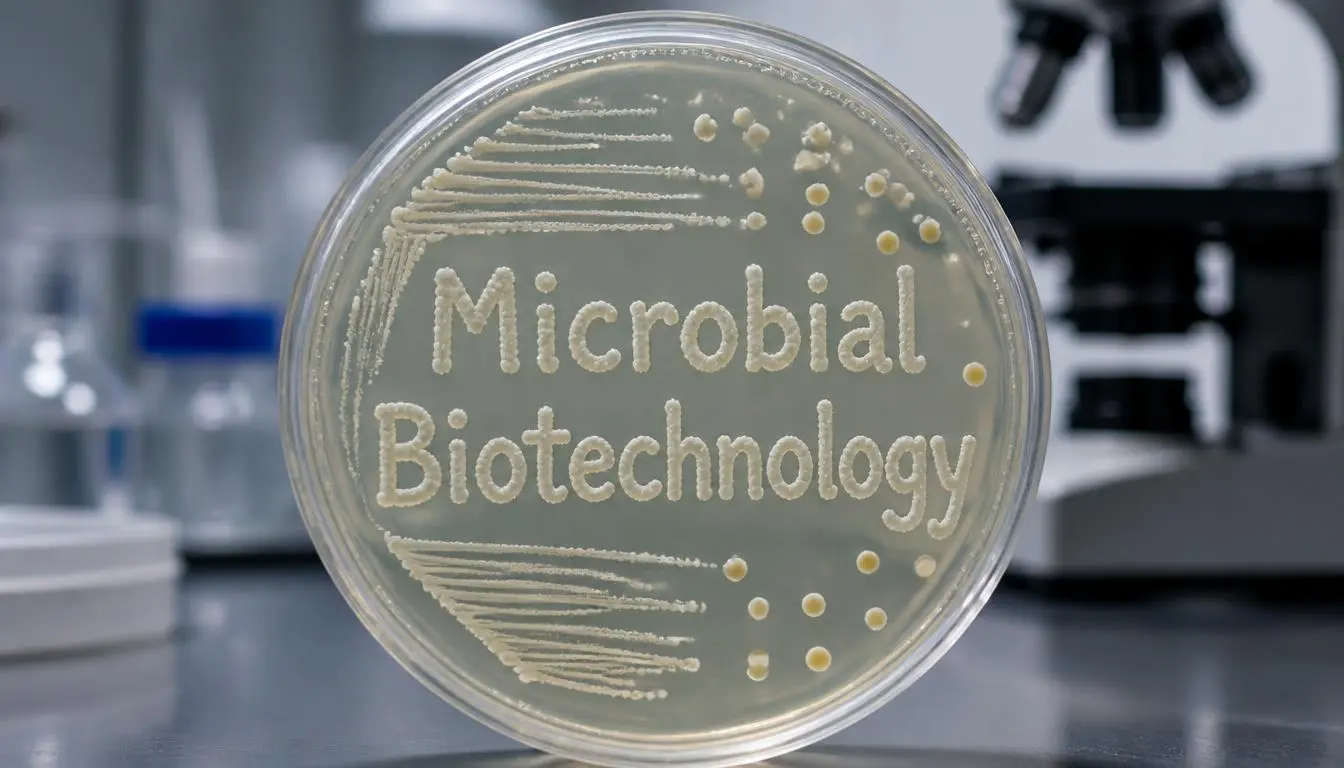
Microbial Biotechnology: Harnessing Microbes for Industry
Introduction
Microbial Biotechnology harnesses bacteria, yeasts, and fungi to develop medicines, improve food production, advance agriculture, and drive sustainable industrial innovation.
Microorganisms are central to many technologies that support modern life. They help manufacture medicines, produce food ingredients, improve agricultural productivity, process industrial waste, and convert renewable resources into valuable chemicals. Bacteria can synthesise amino acids, yeasts can produce recombinant proteins, and fungi can manufacture enzymes used in food processing and industrial applications (Su et al., 2020; Yan et al., 2025).
Microbial Biotechnology applies microbiology, genetics, molecular biology, biochemical engineering, and computational methods to develop these useful products and processes (Yan et al., 2025). Its scope extends from traditional fermentation to advanced approaches involving CRISPR gene editing, metabolic modelling, artificial intelligence, and engineered microbial communities (Kong et al., 2025; Yan et al., 2025).
The field is also changing how scientists approach manufacturing. Instead of focusing only on a microorganism’s ability to produce a target compound, researchers increasingly consider the entire production system: feedstock selection, strain performance, fermentation, product recovery, energy use, safety, and cost (Liu et al., 2025; Konzock & Nielsen, 2024). These factors determine whether a promising biological discovery can become a reliable technology.
This article examines the established applications of Microbial Biotechnology, explains the tools used to improve microbial production, and introduces emerging research areas. It also discusses agricultural applications, regulatory responsibilities, intellectual property, antimicrobial resistance, and the practical challenges of sustainable biomanufacturing.
What Is Microbial Biotechnology?
Microbial Biotechnology is the application of microorganisms, their cellular components, or their biological activities to develop useful products, processes, and technologies (Yan et al., 2025).
It involves both naturally occurring microorganisms and engineered strains. Scientists may use whole cells, isolated enzymes, microbial metabolites, or communities of interacting organisms, depending on the intended application (Weimer et al., 2020).
For example, bacteria can produce amino acids and therapeutic proteins (Su et al., 2020). Yeasts support food fermentation and recombinant protein production (Yan et al., 2025). Fungi supply industrial enzymes, while selected microbial communities help treat wastewater and transform pollutants (Yan et al., 2025).
Microbial Biotechnology overlaps with several related disciplines:
- Genetic engineering: Modifies genetic material to introduce, remove, or alter biological functions (Weimer et al., 2020).
- Metabolic engineering: Redirects cellular pathways to improve the production of a desired compound (Weimer et al., 2020).
- Synthetic biology: Designs or redesigns biological systems using engineering principles (Yan et al., 2025).
- Industrial microbiology: Develops and operates microbial processes for commercial applications (Liu et al., 2025).
- Bioinformatics: Uses computational methods to analyse biological data (Qiu et al., 2023).
- Bioprocess engineering: Designs and optimises the cultivation, recovery, and manufacturing stages (Liu et al., 2025; Straathof et al., 2025).
Together, these disciplines connect biological discovery with practical production (Yan et al., 2025).
Types of Microorganisms Used in Microbial Biotechnology
Different microorganisms possess different metabolic capabilities, growth requirements, and industrial advantages. Choosing the right host is therefore an important early decision (Weimer et al., 2020).
| Table 1. Major microbial groups and their biotechnological applications | ||
| Microbial group | Examples | Representative applications |
| Bacteria | Escherichia coli, Bacillus subtilis, Corynebacterium glutamicum | Recombinant proteins, enzymes, amino acids, and industrial chemicals (Su et al., 2020; Dong et al., 2025) |
| Yeasts | Saccharomyces cerevisiae, Komagataella phaffii | Bread, bioethanol, and recombinant proteins (Yan et al., 2025) |
| Filamentous fungi | Aspergillus niger, Trichoderma reesei | Organic acids, enzymes, and biomass processing (Yan et al., 2025) |
| Archaea | Methanogenic and extremophilic archaea | Methane-related processes and research into specialised biological systems (Guo et al., 2026) |
| Microalgae | Chlorella and selected Nannochloropsisspecies | Pigments, specialty compounds, biomass, and biofuel research (Adjani et al., 2024) |
Note. Examples are illustrative rather than exhaustive. Organism selection depends on the target product, safety requirements, growth conditions, and production economics (Liu et al., 2025).
Bacteria often grow rapidly and are relatively easy to engineer (Su et al., 2020). However, bacterial hosts do not always perform the complex protein-folding and post-translational modifications required by certain therapeutic proteins (Su et al., 2020).
Yeasts possess eukaryotic cellular machinery and can perform some protein modifications, although their processing does not always match that of human cells (Yan et al., 2025). Filamentous fungi are important enzyme producers, but their growth patterns can complicate mixing and oxygen transfer (Yan et al., 2025).
Archaea are useful subjects for investigating specialised metabolism and adaptations to extreme environments (Guo et al., 2026). Microalgae offer opportunities for producing pigments and other high-value compounds, although cultivation, harvesting, and extraction can remain expensive (Adjani et al., 2024).
Major Applications of Microbial Biotechnology
Medical and Pharmaceutical Biotechnology
Microbial Biotechnology has helped transform pharmaceutical manufacturing. Microorganisms can produce therapeutic proteins, vaccine components, enzymes, and other biologically active compounds (Su et al., 2020).
Recombinant human insulin is a landmark example. In 1982, the US Food and Drug Administration approved Humulin, the first approved medical product derived from recombinant DNA technology. The development demonstrated that genetically engineered microorganisms could manufacture a human therapeutic protein at scale (U.S. Food and Drug Administration, n.d.).
Modern microbial production platforms can also manufacture selected vaccine antigens and protein-based pharmaceutical ingredients. For example, recombinant proteins produced in microbial systems can serve as components of certain vaccines (Su et al., 2020). By contrast, mRNA vaccines use a different manufacturing platform: the mRNA itself is produced using biochemical processes rather than relying on a microorganism to manufacture the final vaccine antigen.
Microbial hosts can also produce therapeutic enzymes and selected proteins used in diagnostics (Su et al., 2020). However, complex products such as many monoclonal antibodies are commonly produced in mammalian cell systems because they require specific folding and glycosylation patterns. Microbial systems may instead produce antibody fragments or other simpler protein formats (Yan et al., 2025).
Biosimilars are highly similar biological medicines developed in comparison with an already approved reference biologic. Microbial expression systems can be suitable for some biosimilar products, but host selection depends on the structure and processing requirements of the particular molecule (Yan et al., 2025).
These examples show that pharmaceutical manufacturing requires a suitable match between the product and the production host. Product purity, biological activity, consistency, and safety must all meet applicable regulatory standards (World Health Organization, 2020).
Industrial Biotechnology and Biomanufacturing
Industrial Microbial Biotechnology uses microorganisms to produce chemicals, enzymes, amino acids, solvents, and other useful materials (Weimer et al., 2020).
Escherichia coli, Bacillus subtilis, and Corynebacterium glutamicum are important research and production hosts, although their suitability varies by product (Su et al., 2020). For example, C. glutamicum is widely used in amino acid biotechnology (Dong et al., 2025).
Dong et al. (2025) developed an engineered C. glutamicum strain that produced 50.5 g/L of L-tryptophan after 48 hours in fed-batch fermentation, with a reported yield of 0.17 g per gram of glucose. Their approach combined genome-scale metabolic modelling, pathway engineering, metabolite analysis, and iterative optimisation.
The study illustrates how several complementary methods can improve microbial production. It is an example of computationally informed systems metabolic engineering, not direct evidence that machine learning alone caused the improvement (Dong et al., 2025).
Industrial success also depends on substrate cost, fermentation time, product toxicity, oxygen transfer, purification requirements, and manufacturing consistency. Researchers therefore evaluate the complete process rather than relying on product concentration alone (Konzock & Nielsen, 2024). The TRY metrics—titre, rate, and yield—provide a framework for assessing technoeconomic feasibility, as each impacts production costs differently (Konzock & Nielsen, 2024).
Agricultural Microbial Biotechnology
Agricultural Microbial Biotechnology uses microorganisms to improve nutrient availability, support plant growth, and manage selected plant diseases (Su et al., 2020).
Several important examples demonstrate how these applications work:
- Rhizobium: Certain species form symbiotic associations with legume roots and convert atmospheric nitrogen into forms the plants can use (Su et al., 2020).
- Mycorrhizal fungi: These fungi associate with plant roots and can improve access to phosphorus and other nutrients under suitable conditions (Su et al., 2020).
- Bacillus thuringiensis (Bt): Selected strains produce insecticidal proteins used in certain biological pest-control products and genetically engineered crops (Su et al., 2020).
- Plant-growth-promoting rhizobacteria: These bacteria can influence root development, nutrient acquisition, and plant responses to some environmental stresses (Su et al., 2020).
Microbial biofertilisers can complement conventional fertilisers, while microbial biopesticides may help manage particular pests. Their performance depends on the crop, soil, climate, formulation, and application method (Su et al., 2020).
A promising laboratory result does not establish universal field effectiveness. Agricultural products require suitable field testing, quality control, and guidance on storage and application (Su et al., 2020).
Food and Fermentation Biotechnology
Microorganisms have supported food production for centuries. Yeasts contribute to bread making, while selected bacteria drive the fermentation of yoghurt, cheese, and fermented vegetables (Yan et al., 2025).
Modern biotechnology improves strain selection, process consistency, and control of desirable flavours and textures. Microbial enzymes also help manufacture and modify food ingredients (Yan et al., 2025).
Food fermentation requires careful management of contamination, undesirable metabolites, and product safety. The strains and procedures must be appropriate for the intended food and its regulatory requirements (World Health Organization, 2020).
Environmental Microbial Biotechnology
Microorganisms contribute to wastewater treatment, nutrient cycling, pollutant degradation, and waste conversion (Yan et al., 2025).
Selected microbial communities can remove organic pollutants and transform some hazardous compounds (Yan et al., 2025). Researchers are also investigating enzymes that break down particular plastics (Ogunlusi et al., 2025).
Plastic biodegradation is a promising but technically challenging area. Different polymers vary in chemical structure and resistance to biological attack. Demonstrating degradation in a controlled experiment does not necessarily establish efficient performance in natural environments or industrial waste streams (Ogunlusi et al., 2025).
Microbial approaches should therefore be evaluated using appropriate measurements of pollutant transformation, residual products, process performance, and environmental safety (Yan et al., 2025).
Non-Model Microorganisms as Alternative Cell Factories
Many established production processes use well-characterised hosts. However, organisms outside these traditional groups may possess useful traits that expand the possibilities of Microbial Biotechnology (Weimer et al., 2020).
Selected Halomonas species tolerate high salt concentrations and are being investigated for the production of ectoine, polyhydroxyalkanoates (PHAs), and other compounds (Coimbra et al., 2025). Their salt tolerance may support certain processes designed to reduce reliance on conventional sterile cultivation, although the economic benefit depends on the complete process (Coimbra et al., 2025).
Non-sterile fermentation is not simply the removal of sterilisation steps. Contamination, bacteriophages, unwanted metabolites, and product-quality changes can still compromise production. The process requires suitable monitoring and risk controls (Coimbra et al., 2025).
Other non-model organisms, including selected Pseudomonas species, offer metabolic versatility and can use diverse carbon sources (Weimer et al., 2020). Their practical value depends on the target product, genetic tractability, safety, and operating conditions (Weimer et al., 2020).
How a Microbial Biotechnology Process Works
Microbial manufacturing connects biological design with fermentation, recovery, and quality control. The order and integration of these stages can influence both costs and performance (Liu et al., 2025).
| Table 2. Main stages of microbial biomanufacturing | ||
| Stage | Objective | Examples of methods |
| Strain selection | Identify a suitable organism | Screening and comparative testing (Weimer et al., 2020) |
| Strain development | Improve the desired function | Genetic and metabolic engineering (Weimer et al., 2020) |
| Process optimisation | Establish suitable operating conditions | Medium optimisation, pH control, and feeding strategies (Liu et al., 2025) |
| Fermentation | Produce the target compound | Batch, fed-batch, or continuous cultivation (Liu et al., 2025) |
| Product recovery | Separate and purify the product | Filtration, extraction, distillation, or chromatography (Straathof et al., 2025) |
| Quality and sustainability assessment | Confirm product and process performance | Analytical testing, validation, and environmental assessment (Liu et al., 2025) |
Source note. This general process framework is consistent with discussions of microbial manufacturing and production economics by Liu et al. (2025) and Konzock and Nielsen (2024).
Systematic Microbial Biotechnology
Systematic Microbial Biotechnology considers the organism, manufacturing process, and product recovery as connected parts of one system. Rather than optimising each stage independently, researchers examine how changes in one stage affect the others (Liu et al., 2025).
Liu et al. (2025) describe three useful strategies:
- Simplification: Remove unnecessary steps, inputs, or operational complexity.
- Sequential rearrangement: Change the order of operations to improve overall performance.
- Step coupling: Integrate compatible operations to reduce intermediate handling or energy demand.
In a specific process comparison reported by Liu et al. (2025), a tobacco-straw ethanol process showed approximately 27% lower carbon emissions and 26% lower energy use than a corn-straw ethanol process. These values describe that particular comparison; they are not general estimates for microbial manufacturing.
Genetic and Metabolic Engineering
Genetic engineering changes an organism’s genetic material to introduce, remove, or modify biological functions. Metabolic engineering redirects cellular pathways to improve production of a desired compound (Weimer et al., 2020).
CRISPR-Cas systems have expanded the options for targeted genome editing. Depending on the organism and application, researchers can use these systems to disrupt genes, introduce defined changes, or regulate gene expression (Weimer et al., 2020). Base editing can alter selected DNA bases without requiring the same type of double-strand DNA break used in conventional CRISPR-Cas9 editing (Weimer et al., 2020).
These tools can help modify biosynthetic pathways, transport systems, regulatory networks, and product-tolerance mechanisms. However, the best editing strategy depends on the host, the target, and the possibility of unintended effects (Weimer et al., 2020).
Engineered strains must also be evaluated for stability. A modification that increases product formation may reduce growth or place additional stress on the cell. Strain development therefore involves balancing productivity with robust performance (Weimer et al., 2020).
Genome-Scale Metabolic Models
Genome-scale metabolic models (GEMs) represent biochemical reactions associated with an organism’s genome. Researchers use them to investigate metabolic capabilities and identify possible engineering targets (Qiu et al., 2023).
Flux balance analysis (FBA) is a mathematical approach that estimates feasible distributions of metabolic reactions under specified constraints. In simple terms, it helps researchers explore how a cell might allocate resources among different biochemical pathways (Qiu et al., 2023).
FBA does not automatically predict the exact behaviour of a living cell. Results depend on model quality, assumptions, environmental conditions, and the chosen objective. Predictions require experimental validation (Qiu et al., 2023).
Machine Learning and AI-Assisted Strain Design
Machine learning can help analyse complex biological datasets, identify patterns, and prioritise experiments. In microbial biotechnology, researchers investigate its use in predicting enzyme performance, selecting genetic targets, and optimising process conditions (Kong et al., 2025).
Common approaches include:
- Supervised learning: Learns relationships from examples with known outcomes (Kong et al., 2025).
- Active learning: Selects new experiments expected to provide useful information (Kong et al., 2025).
- Reinforcement learning: Learns sequences of decisions within a defined optimisation problem (Kong et al., 2025).
- Hybrid modelling: Combines data-driven predictions with biological knowledge or mechanistic models (Kong et al., 2025).
For example, a model could rank candidate engineering targets before researchers test them experimentally. A validated workflow would then measure whether the selected modifications actually improve production (Kong et al., 2025).
Machine learning can struggle when datasets are small, inconsistent, or limited to familiar organisms. A model may also perform poorly when transferred to new strains or conditions (Kong et al., 2025).
The most useful approach combines computational predictions with laboratory experiments. Machine learning should help researchers make better-informed decisions, not replace biological reasoning or experimental validation (Kong et al., 2025).
Biosensor-Guided Strain Improvement
Biosensors detect biological signals, such as the presence or concentration of a particular metabolite. In strain development, a biosensor can help identify variants that produce a desired compound (Yu et al., 2026).
Yu et al. (2026) described BRIDGE, a biosensor-guided workflow for indexing genome evolution and improving microbial chemical synthesis. Their study reported 4.67 g/L of protocatechuic acid and 2.97 g/L of cis,cis-muconate in shake-flask cultures.
These results demonstrate the potential of biosensor-guided strain improvement. They are laboratory-scale results, so direct comparison with industrial production requires attention to scale and process conditions (Yu et al., 2026).
A useful biosensor must respond reliably to its target. Researchers need to consider specificity, sensitivity, response time, and whether the signal accurately reflects the production trait they want to improve (Yu et al., 2026).
Microbial Consortia and Synthetic Ecology
Microbial consortia contain two or more microbial populations that interact within a shared environment. They can distribute complex tasks among organisms with different capabilities (Yan et al., 2025).
For example, one organism may convert a feedstock into an intermediate, while another transforms that intermediate into a final product. This arrangement can reduce the burden on a single host or enable functions that are difficult to combine in one organism (Yan et al., 2025).
Synthetic ecology applies ecological principles to the design and management of these communities (Yan et al., 2025).
Two important concepts are:
- Metabolic cross-feeding: One organism uses compounds released by another (Yan et al., 2025).
- Obligate mutualism: Two organisms depend on one another for particular resources or functions (Yan et al., 2025).
Quorum sensing is a form of chemical communication that allows bacteria to respond to signals associated with population density. Researchers can use such communication systems in selected designs to coordinate microbial behaviour (Yan et al., 2025).
Consortia can also introduce new challenges. Populations may compete, community composition may change, and environmental conditions can disrupt intended interactions. Reliable applications require monitoring and testing under realistic operating conditions (Yan et al., 2025).
Deep-Sea Metagenomics and Novel Enzyme Discovery
Deep-sea environments contain microorganisms adapted to unusual combinations of pressure, temperature, nutrient availability, and chemistry. These organisms may possess biological functions valuable for research and biotechnology (Guo et al., 2026).
Metagenomics analyses genetic material recovered directly from environmental samples. It can reveal genes from organisms that are difficult to cultivate using standard laboratory methods (Guo et al., 2026).
Guo et al. (2026) analysed 2,138 deep-sea samples and reported approximately 502 million nonredundant genes and 2.4 million predicted protein structures. Their study also identified a helicase with potential to improve nanopore DNA sequencing speed.
This work illustrates the scale of biological diversity that environmental sequencing can uncover. However, finding a gene or predicting a protein structure does not establish that the protein will perform well in an industrial process. Researchers must test its activity, stability, expression, and production requirements (Guo et al., 2026).
Deep-sea metagenomics is therefore a discovery resource. Its practical value depends on combining sequence analysis with experimental characterisation and, where appropriate, protein engineering (Guo et al., 2026).
Downstream Processing and Product Recovery
After fermentation, the target product must be separated from cells, residual nutrients, by-products, and other components of the broth. This stage is called downstream processing(Straathof et al., 2025).
Depending on the product, recovery may involve filtration, centrifugation, extraction, membrane separation, crystallisation, chromatography, or distillation (Straathof et al., 2025).
Three metrics help researchers assess microbial production (Konzock & Nielsen, 2024):
| Metric | Meaning | Typical unit |
| Titre | Product concentration achieved | g/L |
| Yield | Product formed per amount of substrate consumed | g/g substrate |
| Productivity | Product formed per volume per unit time | g/L/h |
These metrics measure different aspects of a process. Titre describes concentration, yield describes substrate efficiency, and productivity incorporates time. All three can influence manufacturing economics, as each impacts different cost components—substrate costs, capital depreciation, and overall process economics (Konzock & Nielsen, 2024).
In situ product removal separates a product during fermentation rather than waiting until cultivation ends. This approach may be useful when the product inhibits the producing microorganism (Straathof et al., 2025).
Straathof et al. (2025) reviewed vacuum distillation integrated with fermentation for recovering volatile products. In the industrial-scale designs discussed, energy requirements could be reduced by approximately 60–80% through process intensification, heat integration, and heat-pump technologies compared with less energy-efficient recovery configurations. The figure is specific to those designs, not a universal saving for distillation or in situ product removal.
Biosafety, Regulation, and Responsible Use
Microbial biotechnology must address risks associated with biological materials, engineered organisms, manufacturing waste, and possible environmental exposure (World Health Organization, 2020).
Biosafety refers to measures that prevent accidental exposure to biological agents or their unintended release. Biosecurity concerns measures that prevent unauthorised access, loss, misuse, or release of biological materials. The World Health Organization recommends a risk-based approach to laboratory biosafety rather than relying on one set of controls for every organism or procedure (World Health Organization, 2020).
Important considerations include:
- Assessing the organism, engineered traits, intended use, and possible exposure routes (World Health Organization, 2020).
- Applying suitable containment, personal protective equipment, and waste decontamination (World Health Organization, 2020).
- Evaluating the possibility of an engineered organism surviving or spreading outside its intended setting (World Health Organization, 2020).
- Following applicable national rules for research, transport, commercial production, and environmental release (World Health Organization, 2020).
The Cartagena Protocol on Biosafety provides an international framework addressing the safe transfer, handling, and use of living modified organisms that may adversely affect biodiversity, with consideration of risks to human health (Secretariat of the Convention on Biological Diversity, 2000). Its requirements operate alongside national laws and other applicable regulations.
Regulatory pathways differ by country and by product. A genetically modified microorganism used in a contained industrial fermentation may face different requirements from one deliberately released into the environment or used in a food or medical product (World Health Organization, 2020).
Intellectual Property and Commercialisation
A promising microbial strain is not automatically a commercially successful invention. Developers must consider production costs, product demand, regulatory requirements, manufacturing reliability, and the ability to protect or license their technology (Konzock & Nielsen, 2024).
Intellectual property may include patents covering engineered strains, genetic constructs, production methods, or particular applications. Trade secrets may protect confidential information such as process conditions, formulations, and optimisation strategies (Konzock & Nielsen, 2024).
Patent protection is not automatic. It depends on the relevant jurisdiction and requirements such as novelty, inventive step, and patentable subject matter. Researchers and institutions should assess ownership, funding obligations, licensing terms, and freedom to operate before commercialisation (Konzock & Nielsen, 2024).
Techno-economic analysis estimates whether a process can be financially viable under defined assumptions (Konzock & Nielsen, 2024). Life-cycle assessment examines environmental impacts across relevant stages of a product’s life. Both approaches help developers compare potential manufacturing options more systematically (Liu et al., 2025).
Antimicrobial Resistance and Environmental Responsibility
Antimicrobial resistance (AMR) occurs when microorganisms evolve or acquire mechanisms that reduce the effectiveness of antimicrobial medicines. It is a major public-health concern and is relevant to biotechnology in several ways (World Health Organization, 2020).
Antibiotic-producing microorganisms are valuable sources of therapeutic compounds, but antibiotic production, use, and waste management require careful control. Inadequately managed waste streams containing antibiotics or resistant organisms can contribute to environmental exposure and selection pressure (World Health Organization, 2020).
Microbial biotechnology can also support AMR research through diagnostics, antimicrobial discovery, and the development of alternative approaches to infection control. These benefits do not remove the need for responsible production and disposal (World Health Organization, 2020).Facilities should manage antibiotic-containing waste and biological materials according to applicable requirements. Researchers should also consider whether engineered strains carry resistance markers or other traits that could create additional risks if organisms escape containment (World Health Organization, 2020).
Challenges and Future Directions
Microbial biotechnology has substantial potential, but successful development requires coordinated biological and engineering decisions (Liu et al., 2025).
- Microbial biotechnology has substantial potential, but successful development requires
- Strain performance: Engineered strains may lose productivity or behave differently under large-scale conditions (Weimer et al., 2020).
- Scale-up: Oxygen transfer, mixing, heat removal, and nutrient distribution change as fermentation volumes increase (Liu et al., 2025).
- Product recovery: Purification may consume significant energy and resources, especially when the product is dilute or chemically difficult to separate (Straathof et al., 2025).
- Economic feasibility: Feedstock, equipment, labour, energy, product recovery, and quality-control costs all influence commercial viability (Konzock & Nielsen, 2024).
- Environmental performance: Biological production is not automatically sustainable. Resource consumption, waste, emissions, and feedstock sourcing must be considered (Liu et al., 2025).
- Safety and regulation: Organisms and products require appropriate risk assessment, containment, quality control, and compliance with applicable laws (World Health Organization, 2020).
Future progress will depend on integrating microbial engineering with computational tools, improved fermentation systems, product recovery, and responsible innovation. Researchers will increasingly evaluate not only whether an organism can produce a target compound, but also whether the complete process is reliable, affordable, safe, and environmentally appropriate (Liu et al., 2025).
Five Questions for Evaluating a Microbial Biotechnology Project
Before developing a microbial process, researchers can use five questions to connect biological goals with practical outcomes:
- Is the microorganism suitable? Assess its metabolic capabilities, safety, genetic tractability, and compatibility with the product (Weimer et al., 2020).
- What limits production? Identify possible pathway bottlenecks, substrate constraints, product toxicity, or transport problems (Liu et al., 2025).
- How will improvement be measured? Define target titre, yield, productivity, product quality, and experimental controls (Konzock & Nielsen, 2024).
- Can the process be manufactured responsibly? Evaluate scale-up, product recovery, cost, biosafety, and regulatory requirements (Liu et al., 2025; World Health Organization, 2020).
- Does the complete process deliver a meaningful benefit? Consider environmental impacts, resource use, commercial feasibility, and performance under realistic conditions (Liu et al., 2025).
These questions provide a practical framework for evaluating microbial biotechnology projects without treating any single laboratory result as sufficient evidence of success (Liu et al., 2025).
Conclusion
Microbial Biotechnology connects microbial diversity and genetic engineering with the practical demands of manufacturing. Established applications in medicines, industrial chemicals, agriculture, food production, and environmental treatment remain central to the field (Yan et al., 2025). CRISPR editing, metabolic modelling, machine learning, biosensor-guided evolution, and designed microbial communities are expanding the available tools (Kong et al., 2025; Yan et al., 2025).
Progress depends on integrating these innovations with fermentation engineering, downstream processing, economic evaluation, biosafety, and environmental responsibility (Liu et al., 2025). A productive strain is valuable, but its wider significance depends on the quality, reliability, safety, and sustainability of the process in which it operates (Konzock & Nielsen, 2024; Liu et al., 2025).
For students and researchers, the most important lesson is that biotechnology is not simply the manipulation of microorganisms. It is the systematic development of biological capabilities into solutions that work under real-world conditions (Liu et al., 2025).
References
Microbial Biotechnology: Current Advances and Industrial Manufacturing
- Liu, L., Wang, F., Wang, L., Jiang, X., & Zhang, H. (2025). Addressing challenges in microbial manufacturing: Systematic microbial biotechnology. Innovation (Cambridge (Mass.)), 6(6), 100871. https://doi.org/10.1016/j.xinn.2025.100871 (Open Access)
Microbial Cell Factories and Metabolic Engineering
- Coimbra, A. A. B., Prakash, S., Jiménez, J. I., & Rios-Solis, L. (2025). Establishing Halomonas as a chassis for industrial biotechnology: advances in synthetic biology tool development and metabolic engineering strategies. Microbial cell factories, 24(1), 133. https://doi.org/10.1186/s12934-025-02757-2 (Open Access)
- Dong, Y., & Chen, Z. (2025). Systems metabolic engineering of Corynebacterium glutamicum for efficient l-tryptophan production. Synthetic and systems biotechnology, 10(2), 511–522. https://doi.org/10.1016/j.synbio.2025.02.002 (Open Access)
- Su, Y., Liu, C., Fang, H. et al. Bacillus subtilis: a universal cell factory for industry, agriculture, biomaterials and medicine. Microb Cell Fact 19, 173 (2020). https://doi.org/10.1186/s12934-020-01436-8 (Open Access)
- Weimer, A., Kohlstedt, M., Volke, D. C., Nikel, P. I., & Wittmann, C. (2020). Industrial biotechnology of Pseudomonas putida: advances and prospects. Applied microbiology and biotechnology, 104(18), 7745–7766. https://doi.org/10.1007/s00253-020-10811-9 (Open Access)
Synthetic Biology, Synthetic Ecology, and Genome Evolution
- Yan, Q., Ming, Y., Liu, J., Yin, H., He, Q., Li, J., Huang, M., & He, Z. (2025). Microbial biotechnology: from synthetic biology to synthetic ecology. Advanced biotechnology, 3(1), 1. https://doi.org/10.1007/s44307-024-00054-4 (Open Access)
- Yu, D., Chen, H., Zhang, Y., Chen, Y., Chen, H., Lin, S., Wang, J., Yang, H., Ling, X., He, N., & Yuan, J. (2026). Biosensor-guided indexing of genome evolution for boosting microbial chemical synthesis. Trends in biotechnology, 44(6), 1641–1659. https://doi.org/10.1016/j.tibtech.2025.12.019 (Institutional Access May Be Required)
Artificial Intelligence, Machine Learning, and Metabolic Modelling
- Kong, D., Qian, J., Gao, C., Wang, Y., Shi, T., & Ye, C. (2025). Machine Learning Empowering Microbial Cell Factory: A Comprehensive Review. Applied biochemistry and biotechnology, 197(8), 4897–4913. https://doi.org/10.1007/s12010-025-05260-x (Institutional Access May Be Required)
- Qiu, S., Yang, A., & Zeng, H. (2023). Flux balance analysis-based metabolic modeling of microbial secondary metabolism: Current status and outlook. PLoS computational biology, 19(8), e1011391. https://doi.org/10.1371/journal.pcbi.1011391 (Open Access)
Microalgae and Sustainable Biomanufacturing
- Adjani, P. A., Ho, N. H. E., Chen, J.-H., Nagarajan, D., Chen, C.-Y., Hsieh, Y.-M., Ng, I.-S., & Chang, J.-S. (2024). Unlocking the potential of microalgae as sustainable bioresources from up to downstream processing: A critical review. Chemical Engineering Journal, 488, Article 151124. (Institutional Access May Be Required)
Microbial Enzymes, Biocatalysis, and Plastic Biodegradation
- Ogunlusi, T. S., Ikoyo, S. S., Dadashipour, M., & Gao, H. (2025). Engineering IsPETase and Its Homologues: Advances in Enzyme Discovery and Host Optimisation. International journal of molecular sciences, 26(14), 6797. https://doi.org/10.3390/ijms26146797 (Open Access)
Fermentation, Product Recovery, and Production Economics
- Konzock, O., & Nielsen, J. (2024). TRYing to evaluate production costs in microbial biotechnology. Trends in biotechnology, 42(11), 1339–1347. https://doi.org/10.1016/j.tibtech.2024.04.007 (Institutional Access May Be Required)
- Straathof, A. J. J., Janković, T., & Kiss, A. A. (2025). Distillation for in situ recovery of volatile fermentation products. Trends in biotechnology, 43(7), 1540–1549. https://doi.org/10.1016/j.tibtech.2024.12.009 (Open Access)
Deep-Sea Microbiomes and Discovery of Novel Biological Functions
- Guo, Y., Wang, Z., Li, D., Wang, L., Lan, H., Guo, F., Zhao, Z., Liu, Z., Meng, L., Shen, X., Wang, M., Zhao, W., Zhang, W., Kong, C., Shi, L., Sun, Y., Seim, I., Jiang, A., Ma, K., Su, Z., … Dong, Y. (2026). The genetic repertoire of deep-sea microbiome: From sequence to structure and function. Cell host & microbe, 34(8), 1509–1522.e10. https://doi.org/10.1016/j.chom.2026.05.009 (Open Access)
Medical Biotechnology and Pharmaceutical Production
- U.S. Food and Drug Administration. (n.d.). 100 years of insulin. https://www.fda.gov/about-fda/fda-history-exhibits/100-years-insulin (Open Access)
Biosafety, Regulation, and Responsible Biotechnology
- Secretariat of the Convention on Biological Diversity. (2000). Cartagena Protocol on Biosafety to the Convention on Biological Diversity. https://bch.cbd.int/protocol (Open Access)
- World Health Organization. (2020). Laboratory biosafety manual (4th ed.). https://www.who.int/publications/i/item/9789240011311 (Open Access)


